
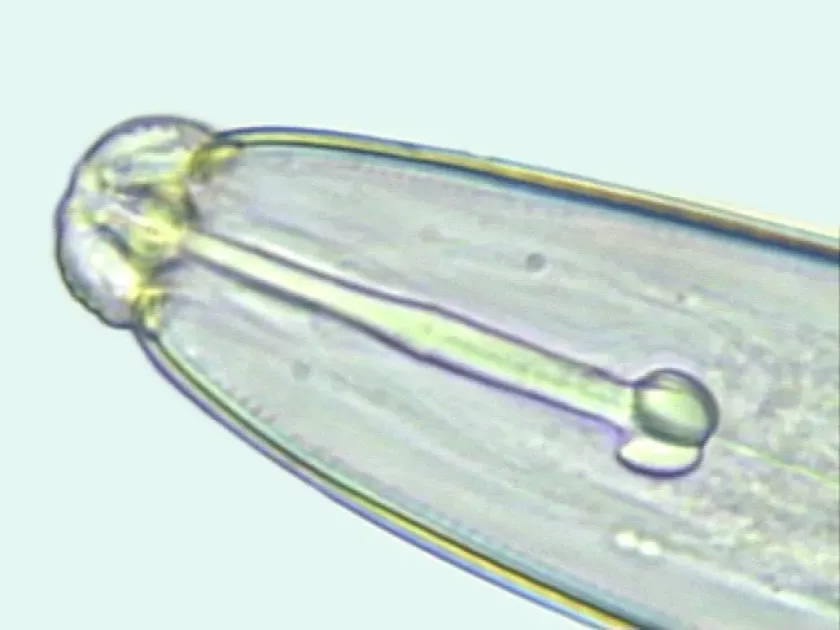
Description
Symptoms
Symptoms often appear as patches of stunted, chlorotic plants that fail to thrive. The root system is the primary target of injury.
A hallmark sign is the presence of deformed root tips, often appearing as galls, hooks, or stubby roots due to damage inflicted on the root meristem during feeding.
Plants often exhibit irregular growth patterns in the field, with some individuals showing severe wilting, especially under water stress conditions.
In mature crops like raspberries or onions, the root system loses its fine feeder roots, becoming necrotic and brittle, which hinders nutrient uptake.
If left unmanaged, these affected areas typically enlarge season by season, significantly reducing the overall plant stand density in the field.
Pathogen
The needle nematode, belonging to the genus Longidorus, is a group of free-living soil ectoparasites. They are characterized by their elongated bodies and a long, needle-like stylet used for feeding.
The infestation is classified as a nematode disease. Unlike endoparasites, these nematodes remain in the soil and feed on the root surfaces, making them external parasites.
These nematodes act as significant vectors for several soil-borne plant viruses, adding a secondary layer of risk to crops like raspberries and various vegetable species.
The host range is quite broad, including bulb crops like onions and garlic, citrus, alfalfa, raspberries, sorghum, winter wheat, and corn.
The entire lifecycle occurs in the soil, which complicates diagnostic efforts and makes the population difficult to eradicate once established in a field.
Conditions for development
Needle nematodes thrive in light-textured soils such as sandy or silty soils, which provide the optimal environment for their movement.
Adequate soil moisture is essential for their activity. While they prefer temperate climates, they can persist in the soil for long periods even in the absence of a primary host.
Spread occurs primarily through contaminated soil movement, transport of infested planting material, and irrigation runoff across fields.
Weeds serve as critical reservoirs for the nematode population during off-seasons, ensuring their survival and potential spread to the next main crop.
Continuous monocropping without rotation promotes the buildup of high nematode populations, leading to severe economic losses over time.
Why it matters
The primary damage results from reduced nutrient and water uptake due to severe root system injury, which translates directly into lower yield and biomass.
The transmission of harmful viruses, such as the raspberry ringspot virus, can lead to the total collapse of plant vigor and fruit quality.
In cereal crops like wheat and corn, nematode feeding stunts initial growth and tiller formation, leading to fewer and smaller heads at harvest.
In onions and garlic, root damage encourages secondary infection by bacteria and fungi, causing significant rot issues during post-harvest storage.
Total yield losses can be substantial, often necessitating the abandonment of specific fields for sensitive crops if the infestation becomes critical.
Protection
Effective crop rotation is the cornerstone of management, involving the use of resistant or non-host crops to starve the population.
Strict phytosanitary control during the selection of planting stock is crucial to prevent the introduction of these parasites to new fields.
Cultural practices, including deep plowing and aggressive weed control, help reduce the nematode population density by removing alternative food sources.
Chemical control via soil fumigation or the use of nematicides may be necessary in extreme cases, though this requires careful adherence to safety regulations.
Biological control strategies, such as incorporating green manures or organic matter, can enhance soil health and support populations of natural predators.
Pathogens and affected parts
Affects crops · 8
Discussion
No discussions yet — be the first.