
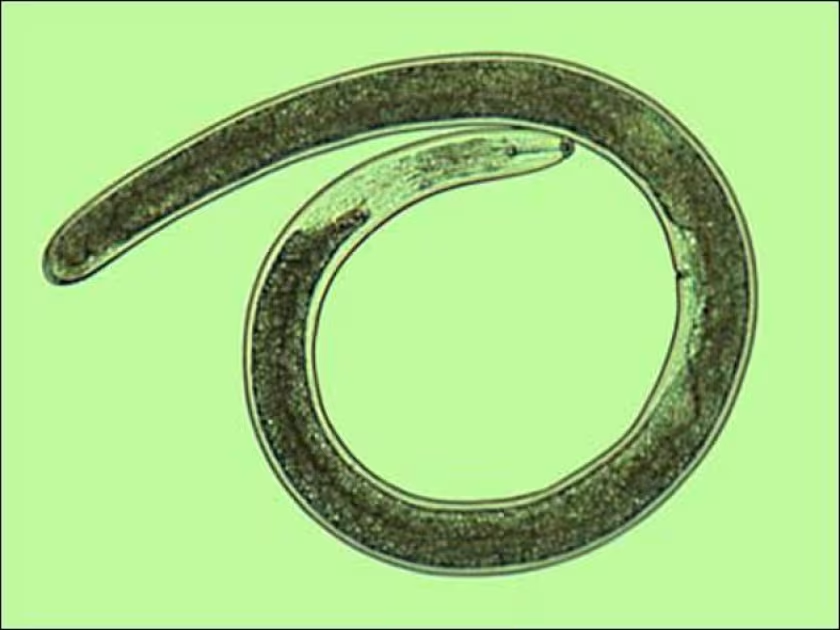
Description
Symptoms
Symptoms of infestation often manifest as stunted growth, chlorosis, and wilting, especially during periods of high environmental stress or drought.
Roots of infected plants typically display symptoms of necrosis, brown lesions, and a reduction in the development of fine feeder roots.
In large-scale plantings like rice fields or wheat farms, the infestation pattern is usually patchy, with areas of stunted plants clearly visible against healthier sections.
Susceptible crops include various plants such as rice, alfalfa, common bean, winter wheat, cranberry, and Indian mango, which all show impaired growth when infested.
Microscopic examination of soil and root samples is necessary for a definitive diagnosis, as physical symptoms alone can often be confused with other root diseases.
Pathogen
The lance nematode, belonging to the genus Hoplolaimus, is a destructive migratory endoparasitic nematode that infects the root systems of various plant species.
These nematodes are distinguished by their robust bodies and large, needle-like stylets, which allow them to penetrate deep into root tissues and cause extensive physical damage.
They act as migratory parasites, moving through the root cortex while feeding on cortical cells, which disrupts the plant's vascular integrity.
The life cycle of the lance nematode takes place primarily in the soil, where it can persist for long periods in the absence of a host by entering a quiescent state.
Due to their size and the strength of their stylets, they are considered one of the most efficient root-damaging nematodes in agricultural settings.
Conditions for development
Lance nematodes thrive in well-aerated, moist soil environments that facilitate their movement between roots and through the soil profile.
Temperature is a major driving force; these nematodes are generally more active and pathogenic during the warmer months of the growing season.
Dissemination occurs primarily via movement of infested soil, contaminated equipment, irrigation water, and the transfer of infected plant material.
Continuous cropping of a single host species allows the population of the nematode to increase to economically damaging levels over several growing cycles.
Maintaining high soil fertility and managing moisture levels can help plants endure nematode pressure, though it does not eliminate the pest population itself.
Why it matters
The primary harm is caused by direct root damage, which restricts the plant's ability to uptake water and nutrients, leading to significant yield losses.
In addition to direct feeding, the wounds created by the nematode provide entry points for secondary fungal and bacterial pathogens, inducing root rots.
For cereals like wheat and rice, the infestation impacts the overall plant vigor, leading to reduced kernel size and poor crop quality.
Long-term infestation in perennials such as mango or cranberry can weaken the root system to the point where the plant becomes susceptible to secondary environmental stresses and premature death.
The economic impact is multifaceted, involving lost yield, increased input costs for chemical treatments, and the long-term degradation of field productivity.
Protection
The most effective management strategy involves the use of certified, nematode-free planting material to prevent the introduction of the parasite to new fields.
Crop rotation using non-host crops is highly effective in reducing the nematode population in the soil over several years.
Implementing strict sanitation protocols for farm machinery and equipment helps prevent the mechanical transport of infested soil between fields.
Chemical nematicides can be applied when the population density reaches economic threshold levels, provided that regulations for their usage are followed.
- Deep plowing to disturb the soil environment and expose nematodes to biological antagonists.
- Using organic amendments to foster a suppressive soil environment.
- Regular monitoring of fields to detect hotspots before they spread across the entire area.
Pathogens and affected parts
Affects crops · 6
Discussion
No discussions yet — be the first.