
Reniform nematode
Rotylenchulus reniformis
Description
Symptoms
The visible symptoms of reniform nematode infestation are often non-specific, frequently mimicking nutrient deficiencies or water stress, such as stunting and yellowing of the leaves.
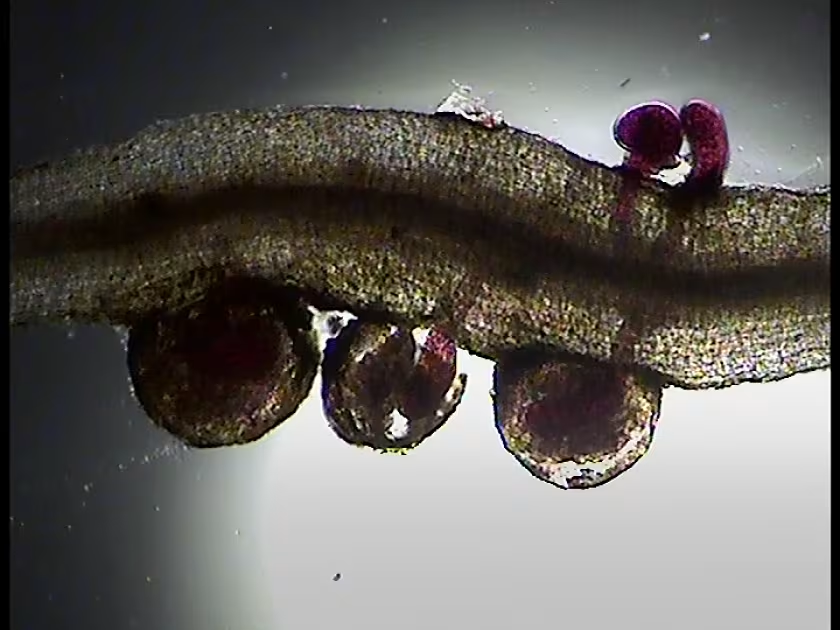
Early infections are difficult to detect as the root system may appear relatively healthy. Closer inspection under magnification reveals small swellings or visible clusters of adult females attached to the root surface.
The nematode disrupts the root's ability to uptake water and nutrients, leading to midday wilting even when soil moisture is adequate. Over time, the roots may become necrotic, promoting secondary bacterial and fungal infections.
Commonly affected host crops include pepper, papaya, chickpea, soybean, cotton, lentil, passion fruit, and common bean.
Heavy infestations result in severe root system degradation. The stunted plants show significantly reduced vigor, leading to poor biomass development and drastically lower fruit or seed production.
Pathogen
The reniform nematode, Rotylenchulus reniformis, is a semi-endoparasitic soil-borne pathogen. It is distinguished by its unique life cycle and significant sexual dimorphism.
Only the adult females are parasitic. They possess a characteristic kidney-shaped body, which gives the species its common name. The immature females penetrate the root tissue while keeping part of their body in the soil.
The life cycle is strictly dependent on the host plant. While soil provides a habitat, the females must establish a feeding site within the roots of a host to reach maturity and produce eggs.
Males do not feed on plant tissues and lack a stylet, which is necessary for penetration. Their primary role is restricted to fertilization, meaning they do not directly contribute to the damage of the root system.
This nematode spreads primarily through the movement of infested soil attached to farm equipment, tools, and the transport of infected planting materials or nursery stock.
Conditions for development
Reniform nematodes thrive in tropical and subtropical climates. They are highly active in warm temperatures, with an optimum range between +25°C and +30°C for growth and reproduction.
Soil moisture is a critical factor; moderate humidity promotes movement and invasion. However, the nematode is resilient and can survive dry conditions by entering a state of dormancy until favorable conditions return.
Well-aerated, sandy or silty-loam soils generally facilitate faster colonization compared to heavily compacted clay soils. The presence of susceptible host plants in a continuous rotation encourages rapid population growth.
High population densities are often reached in areas where the same host crops are grown repeatedly, leading to "nematode fatigue" in the soil and increasing the difficulty of subsequent crop production.
Because they are capable of surviving long periods without a host, eradication is nearly impossible once an area is infested, making management focus on containment and population reduction.
Why it matters
The primary economic impact is a substantial loss in crop yield and market quality. Infestations can reduce overall production by 30% to 50% depending on the specific host and environmental stress levels.
For crops like cotton and soybean, the nematode directly reduces the number of bolls or pods. This directly translates to significant financial losses for commercial producers.
The infected plants require more inputs, such as irrigation and fertilizers, to compensate for the compromised root system, further increasing the cost of production without ensuring harvest recovery.
Trade restrictions often apply to agricultural products grown in infested zones, preventing growers from accessing lucrative international markets and impacting regional economies.
Long-term infestation can turn high-yielding agricultural land into marginal areas, where only expensive soil treatments or resistant cultivars can sustain a profitable harvest.
Protection
Managing the reniform nematode relies heavily on integrated pest management (IPM) practices, specifically focusing on crop rotation with non-host or antagonistic species.
Preventing the introduction of the pest is the most effective strategy. Growers should strictly verify that all planting material, machinery, and tools are free from contaminated soil.
- Steam sterilization of soil in greenhouse or high-value nursery environments.
- Application of chemical nematicides based on established economic thresholds.
- Use of cover crops with natural bio-fumigant properties to lower nematode populations.
- Thorough cleaning of farm equipment and tires before moving from infested fields to clean areas.
Breeding and planting resistant or tolerant crop cultivars remains the most sustainable approach to minimizing the impact of Rotylenchulus reniformis in modern agriculture.
Pathogens and affected parts
Affects crops · 10
Discussion
No discussions yet — be the first.