
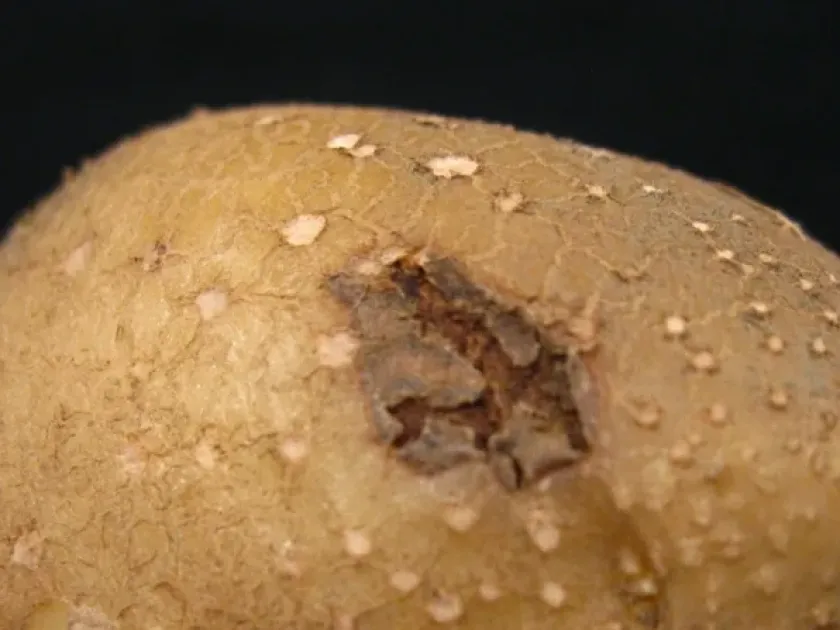
Description
Symptoms
External symptoms often mimic nutrient deficiencies or water stress. Infected plants appear stunted, show chlorotic leaves, and lack general vigor.
Upon examination, the root system shows characteristic brown or black lesions, which give these nematodes their common name. Over time, these lesions merge, affecting large areas of the root surface.
The root system becomes underdeveloped, with significant necrosis of fine feeder roots. Infected plants are often easily pulled from the soil due to the loss of root integrity.
In perennial trees like the black walnut, infestations lead to premature leaf drop, reduced winter hardiness, and gradual dieback of branches or the entire tree.
Diagnostic efforts are often complicated because symptoms appear in patchy areas throughout a field, making it difficult to differentiate from other abiotic stressors.
Pathogen
The causative agent of this disease is the Pratylenchus genus, which includes migratory endoparasitic nematodes. These are obligate parasites that spend most of their life cycle within the root tissues of their host plants.
The disease is classified as a root nematode infection. Nematodes actively penetrate the root cortex, creating tunnels while feeding on cell contents, which leads to the structural degradation of the root system from within.
Unlike gall-forming nematodes, these do not produce visible swellings. Instead, they constantly move, leaving behind necrotic lesions that serve as entry points for various secondary fungal and bacterial infections.
Reproduction occurs both in the soil and within the root tissue, meaning a large portion of the population is often hidden from surface monitoring.
This pest affects a wide range of crops, including vegetables, grains, fruit trees, and high-value timber species such as the black walnut.
Conditions for development
Lesion nematodes thrive in light, sandy, or sandy-loam soils, which provide a suitable environment for their movement within the soil water film.
Optimal development occurs in moderate soil moisture and temperatures ranging between 15°C and 25°C. Extreme dryness or saturation can limit their activity, though they are quite resilient.
The presence of weeds serves as a crucial factor, as they act as alternative hosts that maintain nematode populations during the absence of the main crop.
Dissemination occurs primarily through the movement of contaminated planting material, as well as soil particles attached to farm machinery, tools, and footwear.
Continuous cultivation of host crops on the same site allows nematode populations to reach economically damaging levels very quickly.
Why it matters
The primary harm is caused by a combination of direct root damage and the systemic weakening of the plant, which makes it highly susceptible to opportunistic pathogens.
On black walnut plantations, nematodes can cause severe growth reduction, degrade the quality of the wood, and increase the mortality rate of young seedlings.
Economic losses arise from lower crop yields, reduced marketability of produce, and the high costs associated with mitigation and replanting efforts.
High population densities in the soil lead to significant stand thinning, which necessitates costly reseeding and complicates field management.
Overall plant vitality is compromised, making crops less resilient to environmental stresses such as drought, frost, and extreme heat.
Protection
The most important control strategy is the use of nematode-free, certified planting material, as this is the primary route for introducing the pathogen to a new area.
Implementing a crop rotation strategy using antagonistic crops, such as marigolds or mustard, can help suppress nematode populations naturally in the soil.
Good agricultural practices, including thorough soil cultivation and effective weed management, are essential to reducing the pest's environment.
In cases of severe infestation, nematicides may be used prior to planting, although their application is highly regulated due to environmental and safety concerns.
Regular soil sampling and laboratory analysis are recommended before establishing new plantations to assess nematode density and plan appropriate intervention strategies.
Pathogens and affected parts
Affects crops · 1
Discussion
No discussions yet — be the first.