
Foliar nematode
Aphelenchoides spp.
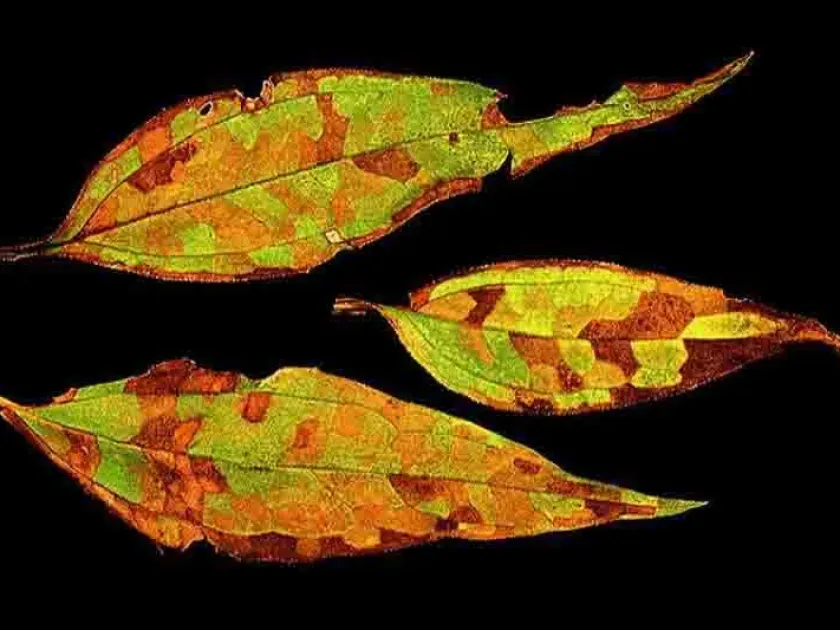
Description
Symptoms
Initial symptoms appear as angular spots restricted by leaf veins, which gradually turn brown or dark necrotic patches.
Leaves begin to distort, yellow, and drop prematurely. In severe infestations, necrosis spreads throughout the entire leaf blade, leading to stunted growth of the entire plant.
During early stages, symptoms might be subtle, but in high humidity, the tissues take on a water-soaked appearance. Eventually, discolored bands form, which dry out over time.
Infestation of buds leads to their abortion or the development of deformed, curled leaves. Often, affected specimens lose their marketability and fail to bloom properly.
- angular spots between veins;
- leaf distortion and curling;
- darkening and premature leaf drop;
- stunted growth;
- lack of flowers or deformed blossoms.
Pathogen
The disease is caused by microscopic worms of the Aphelenchoides genus. These are endo- and ectoparasites that primarily inhabit the tissues of leaves, stems, and buds of various plants.
Classified as a nematode infestation, it disrupts the internal transport of nutrients and water within plant cells. Nematodes multiply rapidly, using water films to migrate between healthy and infected plant parts.
The parasite's biological cycle involves larvae entering through leaf stomata. Inside the leaf tissue, they feed on cell contents, causing the destruction of cellular structure, which inevitably leads to localized tissue death.
Susceptible crops include Gerbera jamesonii, Passiflora, and various types of geraniums like Pelargonium graveolens and Pelargonium peltatum. Also affected are Primula species, specifically Primula malacoides and Primula obconica.
These organisms are highly resistant to adverse environmental conditions, remaining viable in soil residues and dry plant debris for extended periods of time.
Conditions for development
High humidity and wet foliage are the primary conditions required for foliar nematode development. The parasite actively moves along moisture films, such as dew or irrigation water.
Optimal temperatures for reproduction range from +20°C to +25°C. Under these conditions, the life cycle of a single generation can be completed in as little as 10 to 14 days.
Spread occurs primarily through infested planting material, contaminated soil, or dirty gardening tools. In greenhouse environments, overhead irrigation is a major driver of infestation.
Dense planting, which limits air circulation and promotes moisture retention, creates an ideal environment for rapid outbreaks of the disease.
Inconsistent sanitation practices and fluctuating temperatures significantly accelerate the spread of nematodes within enclosed cultivation spaces.
Why it matters
The pest causes significant economic losses for commercial nurseries and ornamental plant growers by destroying the aesthetic value and health of their crops.
Due to the speed of reproduction, a foliar nematode infestation can overwhelm an entire collection of plants, necessitating the complete destruction of affected stock.
Infected plants become susceptible to secondary bacterial and fungal pathogens that enter the tissues through the micro-wounds caused by nematode feeding.
Systemic damage exhausts the plant's metabolic resources, rendering the specimen unable to recover even when favorable conditions are restored.
Due to the hidden nature of the infestation, diagnostics are often delayed, making control measures significantly less effective once the plant is compromised.
Protection
The most important control strategy is maintaining strict sanitation: using only sterile growing media and healthy, certified planting material.
Avoid overhead irrigation. Use drip or bottom watering to prevent water from accumulating on foliage, which restricts the movement of nematodes between leaves.
Immediately remove and destroy any infected specimens detected. Thoroughly disinfect all tools, benches, and containers that have come into contact with affected plants.
In professional settings, thermal treatment of bulbs or cuttings in hot water (+45°C) for specific durations is often used to eradicate the pathogen.
Chemical control is challenging due to the pest's internal lifestyle. When necessary, systemic nematicides should be applied strictly according to professional guidelines.
Pathogens and affected parts
Affects crops · 12
Discussion
No discussions yet — be the first.