
Haworthia
Haworthia
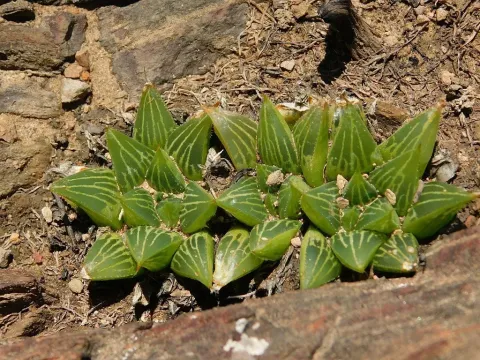
Haworthia is a genus of small succulent plants belonging to the Asphodeloideae family. Native to South Africa, these plants are naturally adapted to arid environments, often growing in the shade of rocks or larger desert flora.
What the section contains
 Haworthia arachnoidea
Haworthia arachnoidea
Haworthia arachnoidea
 Haworthia aristata
Haworthia aristata
Haworthia aristata
 Haworthia bolusii
Haworthia bolusii
Haworthia bolusii
 Haworthia cooperi
Haworthia cooperi
Haworthia cooperi
 Haworthia decipiens
Haworthia decipiens
Haworthia decipiens
 Haworthia emelyae
Haworthia emelyae
Haworthia emelyae
 Haworthia herbacea
Haworthia herbacea
Haworthia herbacea
 Haworthia hybrids
Haworthia hybrids
Haworthia hybrids
 Haworthia mutica
Haworthia mutica
Haworthia mutica
 Haworthia nortieri
Haworthia nortieri
Haworthia nortieri
 Haworthia pubescens
Haworthia pubescens
Haworthia pubescens
 Haworthia pygmaea
Haworthia pygmaea
Haworthia pygmaea
 Haworthia retusa
Haworthia retusa
Haworthia retusa
 Haworthia semiviva
Haworthia semiviva
Haworthia semiviva
 Haworthia springbokvlakensis
Haworthia springbokvlakensis
Haworthia springbokvlakensis
 Haworthia turgida
Haworthia turgida
Haworthia turgida
 Haworthia variegata
Haworthia variegata
Haworthia variegata
 Haworthia vlokii
Haworthia vlokii
Haworthia vlokii
Haworthia
Botanically, they are characterized by rosettes of thick, fleshy leaves. Many species feature distinct white tubercles or translucent 'windows' on their leaf surfaces, which allow them to optimize light absorption in shady habitats.
Agricultural success depends on a well-drained growing medium. The potting mix must be highly inorganic, utilizing perlite, pumice, and coarse sand to ensure that moisture does not accumulate around the roots.
Environmental conditions require mimicking their native climate: they thrive in temperate settings with bright, indirect light. During winter, Haworthia enters a semi-dormant phase and requires lower temperatures and minimal irrigation.
The primary utility of Haworthia is ornamental. Due to their slow growth rate and architectural aesthetic, they are extensively used in terrariums, decorative pots, and as indoor houseplants for collectors and hobbyists.
The most common cause of plant failure is root rot. This typically occurs when plants are overwatered or kept in soil mixtures that lack sufficient porosity to allow for quick drainage.
Pests that frequently infest Haworthia include mealybugs, which hide deep within the crevices of the leaf rosettes, and spider mites, which thrive in low-humidity environments.
Root mealybugs can also affect the subterranean part of the plant, often going unnoticed until the entire plant begins to wither and lose root mass.
Management of these threats involves the use of systemic insecticides or horticultural oils, combined with immediate isolation of infected specimens to prevent spread to the rest of the collection.
Effective prevention is achieved through strict irrigation discipline, ensuring the soil dries out completely between waterings, and maintaining adequate airflow in the growing area.