
Haworthia nortieri
Haworthia nortieri
Description
Growing requirements
Haworthia nortieri is a distinct species of succulent belonging to the Asphodelaceae family. Originating from the arid regions of South Africa, this plant has adapted to survive in harsh, rocky environments, which informs its specific cultivation requirements.
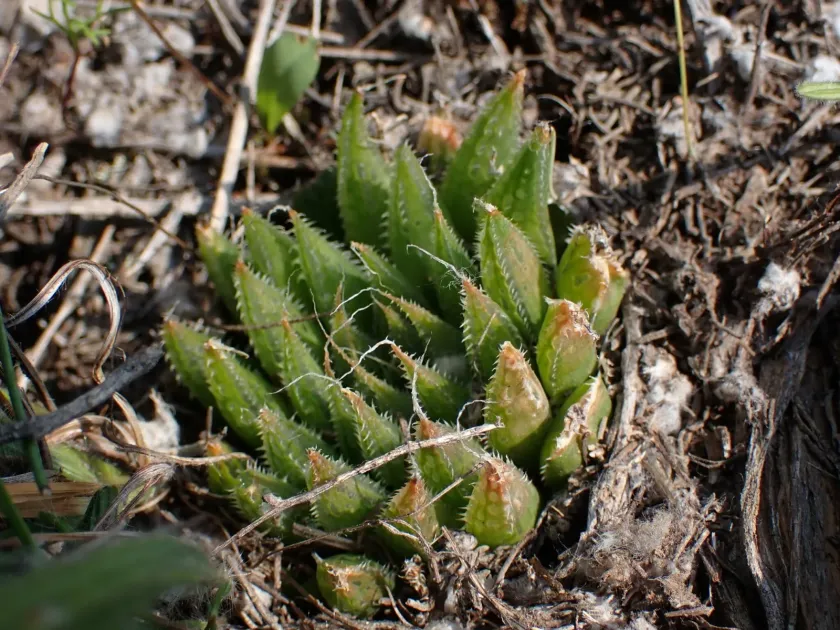
The plant features a compact rosette structure with succulent, fleshy leaves. These leaves are typically textured with small, translucent tubercles, an adaptation that allows the plant to maximize water storage during dry seasons in its natural habitat.
Successful cultivation requires a highly porous and well-draining soil mix. A suitable substrate should consist of coarse sand, perlite, and pumice, ensuring that water drains quickly away from the root system to prevent anaerobic conditions.
Environmental conditions must mimic the plant's native habitat. This includes providing bright, indirect sunlight throughout the day. Direct, intense sunlight can lead to scorched leaves, while insufficient light may cause the plant to etiolate and lose its compact form.
Watering management is critical for the survival of Haworthia nortieri. The plant follows a dormant cycle during cooler months, during which watering should be drastically reduced. During the growing season, watering must be performed only after the substrate has completely dried out.
Main diseases and pests
The most significant threat to this species is root and crown rot, primarily caused by waterlogged soil conditions and poor aeration around the root zone.
Mealybugs are the most common insect pests encountered in succulent collections. They tend to cluster in the tight spaces between leaves, making them difficult to detect until they cause significant damage.
Spider mites represent another potential threat, particularly in environments with very low humidity, leading to leaf discoloration and a general decline in the plant's health.
Preventative measures include maintaining proper airflow and strict adherence to a watering schedule that avoids excessive moisture retention in the soil.
If an infestation or fungal infection occurs, it is essential to isolate the affected plant and treat it with systemic insecticides or fungicides specifically formulated for succulent varieties.