
Gasterhaworthia pumila
Tulista pumila (L.) G. D. Rowley x Gasteria carinata (Mill.) Duval var. verrucosa (Mill.) Van Jaarsv.
Description
Growing requirements
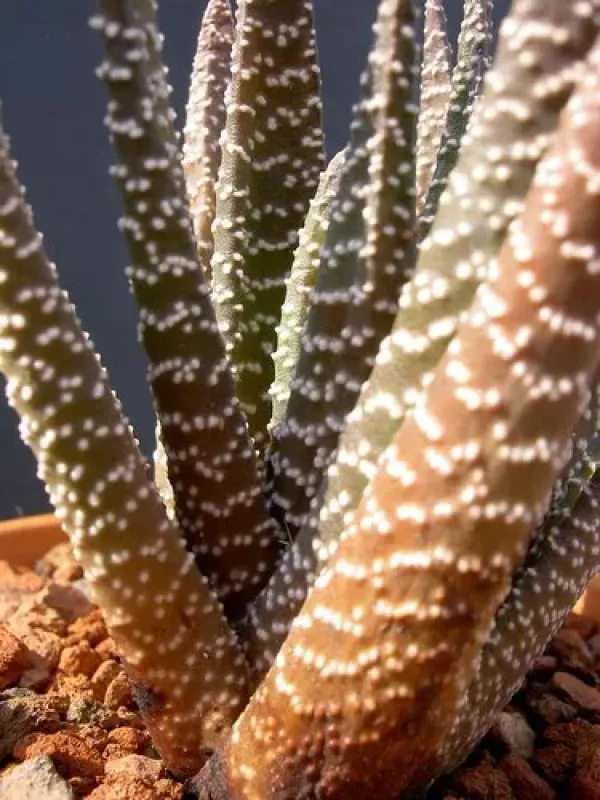
Gasterhaworthia pumila is an intergeneric hybrid within the Asphodelaceae family, resulting from the hybridization of Tulista pumila and Gasteria carinata var. verrucosa. This succulent is highly valued for its geometric rosette structure and unique tuberculate leaf texture that mimics its parents' xerophytic adaptations.
Originating from the diverse landscapes of South Africa, this crop requires specific environmental conditions to maintain its structural integrity. It thrives in well-draining, gritty substrates that prevent moisture accumulation around the basal tissues, mirroring its native rocky habitat.
Optimal growth is achieved under bright, indirect light conditions. While the plant can tolerate lower light levels, excessive shade often results in etiolation, where the leaves become thin and pale, losing the desired compact form and distinct textural patterns.
Temperature management is critical; the plant performs best in a range between 20°C and 25°C. During the dormant winter phase, temperatures should be allowed to drop to 12–15°C to simulate natural seasonal changes, which helps promote better health and structural vigor in the following season.
In commercial and amateur cultivation, Gasterhaworthia pumila serves primarily as a ornamental specimen. Its slow growth rate and architectural aesthetic make it an ideal candidate for professional interior landscaping and small-scale container gardening in arid-style displays.
Main diseases and pests
Root rot remains the primary physiological threat to Gasterhaworthia pumila. This condition is almost exclusively induced by overwatering or the use of heavy, non-porous soil mixtures, leading to the rapid decay of the vascular system of the rootstock.
Mealybugs are the most prevalent pest affecting this crop. They tend to congregate in the axils of the leaves, where they are protected from physical contact, requiring systemic insecticides or targeted mechanical cleaning to prevent significant sap depletion.
Spider mites represent a secondary threat, particularly when the ambient air becomes excessively dry. These pests thrive in indoor conditions, causing small necrotic spots on the leaf surface that permanently impair the plant's ornamental value.
Effective pest management involves integrated control measures, including regular physical inspection and proper ventilation. Ensuring that the crown of the rosette remains dry is essential to prevent secondary bacterial infections that follow pest-induced damage.
Proactive monitoring of the plant's health, particularly during the transition between active growth and dormancy, is key. Early intervention with specialized fungicides and acaricides is necessary to protect the aesthetic and biological quality of the succulent collection.