
Haworthia vlokii
Haworthia vlokii
Description
Growing requirements
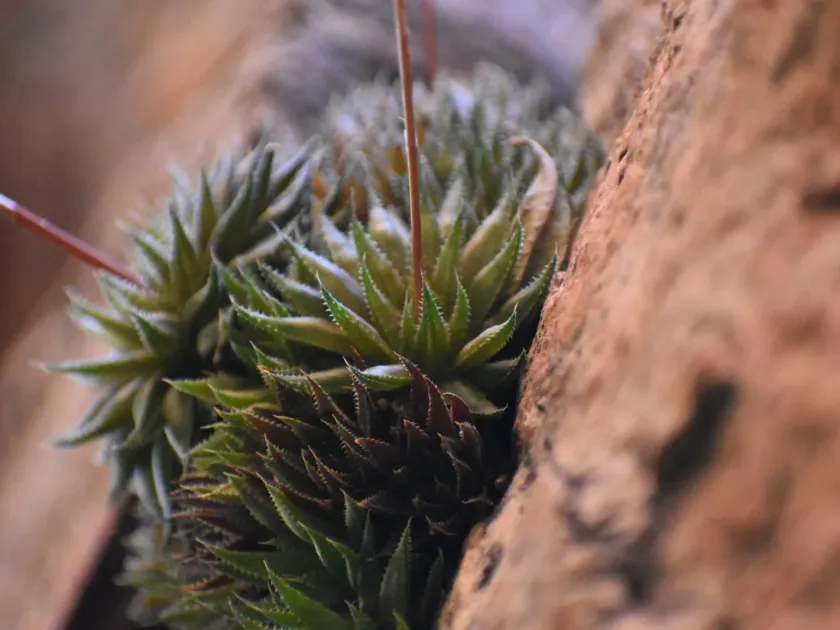
Haworthia vlokii is a slow-growing succulent belonging to the Asphodelaceae family. Originating from the Cape Province in South Africa, this species is highly valued for its striking, textured foliage and compact rosette structure, typically found in rocky crevices.
The botanical profile of the plant includes lance-shaped leaves with distinct white tubercles, which provide a unique aesthetic appeal. This species is naturally adapted to survive in mineral-rich, stony soils where water drainage is almost instantaneous after rainfall.
Cultivation requirements demand a specialized soil mix consisting of pumice, coarse sand, and a minimal fraction of organic potting soil. Proper aeration is crucial to prevent the roots from suffocating and to ensure the plant maintains its rigid form.
Regarding climate, Haworthia vlokii thrives in bright, indirect light conditions. While it can withstand some morning sun, intense afternoon exposure must be avoided to prevent tissue scorching and color degradation of the rosettes.
Watering techniques are fundamental to successful agrotechnics. Practitioners should employ a soak-and-dry method, ensuring the medium is completely desiccated before the next application. Over-watering is the most common reason for failure in domestic cultivation.
Main diseases and pests
The primary threats to Haworthia vlokii include various types of root rot caused by stagnant moisture. Because the plant has succulent adaptations for water storage, any excess dampness quickly leads to tissue necrosis and bacterial decay.
Mealybugs represent the most persistent pest threat. These insects frequently congregate in the crevices of the rosette, where they are protected from topical treatments, making regular manual inspection of the leaf axils essential.
Spider mites can also become problematic in low-humidity environments. Their presence is usually signaled by fine webbing and a stippled appearance on the leaves, which significantly impacts the decorative value of the specimen.
Biological control or the use of targeted acaricides is recommended for severe infestations. Always ensure that the chemical treatments are compatible with succulent tissues to avoid causing phytotoxic burns on the sensitive leaf surfaces.
Maintaining good hygiene in the greenhouse or growing area is the best defense against pathogens. Proper spacing between individual plants ensures sufficient airflow, reducing the risk of fungal outbreaks and promoting uniform growth throughout the season.