
Gonialoe
Gonialoe
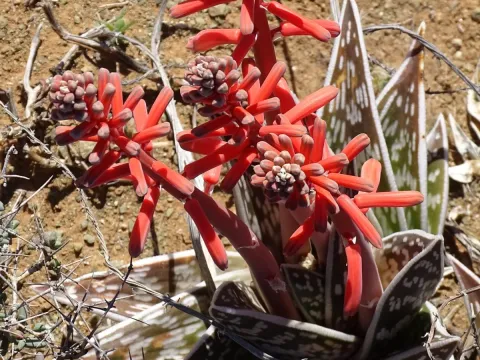
Gonialoe is a monotypic genus of succulent plants belonging to the Asphodelaceae family, represented by its sole species, Gonialoe variegata (formerly Aloe variegata). Native to the arid regions of Southern Africa, this plant has evolved to thrive in environments with low rainfall and high solar radiation.
What the section contains


Gonialoe
The botanical structure of the plant is defined by its distichous or tristichous leaf arrangement, forming a compact, dense rosette. The leaves exhibit a striking appearance with white mottled patterns on a dark green surface, complemented by serrated white margins that distinguish it from other aloe-like succulents.
Regarding cultivation requirements, Gonialoe demands a well-draining, gritty soil medium that prevents moisture retention around the root zone. Standard potting mixes for cacti and succulents, enriched with mineral components like pumice or perlite, are considered the gold standard for healthy root development.
The species prefers bright, indirect light to maintain its compact shape and vibrant leaf markings. Direct, intense sunlight in summer should be filtered to prevent sunburn, while seasonal temperature fluctuations are necessary to induce its natural resting phase during the winter months.
Economically, Gonialoe is valued as an ornamental specimen in horticulture and xeriscaping. Due to its slow-growing nature and moderate size, it is highly sought after by collectors for container gardening and indoor displays, requiring minimal water and low maintenance compared to typical greenhouse crops.
Root and stem rot caused by fungal pathogens remains the most significant threat to Gonialoe production. This condition is almost exclusively associated with improper irrigation practices, such as waterlogging the soil or allowing water to pool within the leaf axils.
Pest pressure is primarily driven by mealybugs, which are notorious for infesting the tight crevices of the leaf rosettes. Integrated pest management strategies, including the use of horticultural oils and systemic insecticides, are required to manage outbreaks without damaging the plant's succulent tissues.
Spider mites can also be problematic in indoor environments with low humidity and high temperatures. Effective control measures involve increasing ambient humidity levels and utilizing specialized acaricides to prevent the collapse of the plant's epidermis due to sap-sucking activity.
Nutrient imbalances or physiological disorders, such as chlorosis, may occur if the soil pH is not maintained within the optimal neutral to slightly alkaline range. Soil testing and the application of low-nitrogen fertilizers are recommended during the active growing season.
Cultural sanitation is paramount, especially when introducing new specimens into an existing collection. Quarantining plants and inspecting the root systems for pests are essential protocols to ensure the long-term viability and health of the Gonialoe crop.