
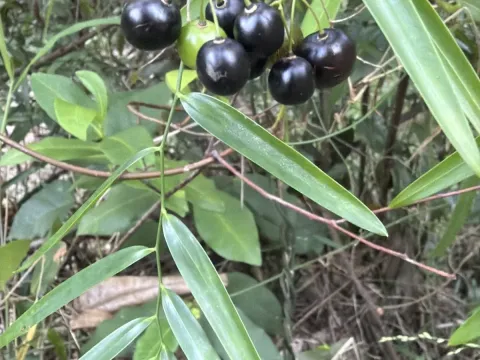
Geitonoplesium
Geitonoplesium
Propagation of Geitonoplesium is typically performed through seeds or stem cuttings, with the latter preferred for maintaining consistent plant characteristics.
What the section contains

Geitonoplesium
Seeds should be sown in a well-draining, nutrient-rich potting mix, maintaining a temperature range of 20 to 25 degrees Celsius to encourage germination.
Seedlings develop slowly, so patience is required during the initial stages; consistent moisture and shelter from direct wind are crucial for young sprouts.
Stem cuttings should be taken from healthy, semi-hardwood portions of the vine, preferably during the active growing season for better rooting success.
Using a rooting hormone on the base of cuttings before planting them in moist sand or vermiculite significantly improves the rate of successful establishment.
Geitonoplesium, a member of the Asphodelaceae family, is a perennial evergreen climber native to the forest regions of Australia and nearby islands.
The plant thrives in fertile, loamy soils that possess excellent drainage, as it is highly susceptible to root rot if left in waterlogged conditions.
Exposure to bright, indirect sunlight is optimal for Geitonoplesium, as direct midday sun can often scorch the delicate foliage of the climbing vine.
Climate-wise, it prefers mild, frost-free environments, requiring protection if temperatures approach freezing levels, which can severely damage the plant structure.
As a climbing species, it necessitates sturdy support structures such as trellises, fences, or wires to facilitate its upward growth and proper foliage display.
Excessive humidity combined with poor air circulation is the primary cause of fungal outbreaks, including powdery mildew and various leaf spot diseases.
Pests such as aphids, spider mites, and scale insects can be problematic, especially in indoor or greenhouse settings where predators are naturally absent.
Root rot caused by Phytophthora or Pythium species is a significant threat that often stems from overwatering or poorly draining soil mixtures.
Physical damage to the stems from improper handling or heavy winds can create entry points for opportunistic infections, requiring careful pruning of damaged sections.
Regular monitoring and integrated pest management practices are essential to keep the climber healthy and prevent the rapid spread of infections among plants.
While primarily grown for its aesthetic value in landscape design, certain parts of the plant are traditionally harvested for culinary use in some regions.
Harvesting young, tender shoots should be done selectively to ensure the plant maintains its structural integrity and continues to produce new growth.
Cutting the vine tips encourages secondary branching, which is beneficial for both increasing total biomass and improving the plant's overall density and appeal.
The best time for harvesting is during the early morning hours, as this ensures that the tissues are fully hydrated and stay fresh for a longer period.
Proper post-harvest storage involves placing the clippings in a cool, ventilated area away from direct sunlight to preserve quality and nutritional integrity.