
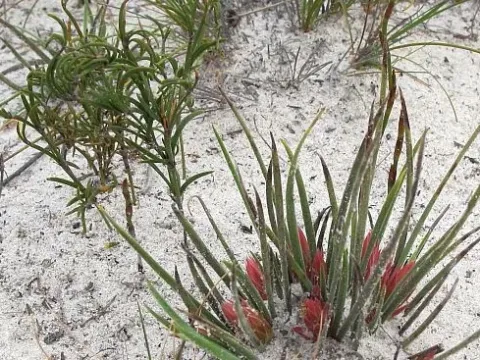
Johnsonia
Johnsonia
Johnsonia is a genus of perennial herbaceous plants belonging to the family Asphodelaceae. Native to the southwestern regions of Western Australia, these plants have adapted to specialized ecological niches characterized by sandy and nutrient-poor soils.
What the section contains

Johnsonia
The botanical profile of Johnsonia includes a basal rosette of narrow, linear leaves and unique inflorescences that are partially enclosed by protective bracts. This evolutionary adaptation serves to shield the reproductive organs in harsh Australian climates.
Successful cultivation of Johnsonia requires strict adherence to soil moisture management. It is essential to use a highly permeable substrate, often consisting of a mix of coarse sand and inorganic materials, to facilitate rapid water drainage.
Plants thrive under bright, filtered light conditions. Excessive exposure to direct sunlight can damage the sensitive leaf tissue, necessitating the use of light shading or placement in a conservatory with controlled light intensity.
The climate requirements involve maintaining moderate temperatures with low atmospheric humidity. Fluctuations in temperature can affect the growth rate, making this genus a challenging but rewarding subject for specialized greenhouse collections.
Root rot, primarily caused by fungal pathogens in waterlogged soils, is the most common threat to Johnsonia. Once established, these diseases are difficult to treat, often necessitating the complete removal of the affected specimen.
Mealybugs are the primary pest concern for this genus, as they frequently cluster deep within the tight leaf rosettes where they are shielded from contact pesticides. Regular inspection and systemic treatments are recommended.
Spider mites can proliferate if the environment becomes too hot and dry. These pests extract sap from the foliage, causing stippling and eventual loss of the plant's aesthetic and physiological vigor.
Inadequate airflow within the cultivation area encourages the development of powdery mildew and other foliar fungi. Maintaining a steady, gentle circulation of air is vital for the health of the plant.
Nutritional imbalances, particularly those caused by improper fertilization, can lead to leaf yellowing or necrosis. Using a low-concentration, slow-release fertilizer tailored for desert-adapted plants is the safest practice.