
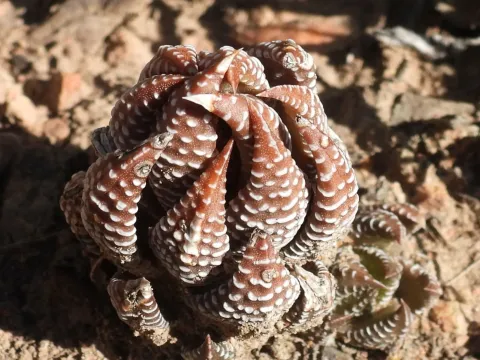
Haworthiopsis
Haworthiopsis
Haworthiopsis is a genus of succulent plants belonging to the Asphodelaceae family. Native to the arid regions of Southern Africa, these plants have evolved to survive in rocky habitats, often finding protection under larger shrubs from intense heat.
What the section contains
 Haworthiopsis attenuata
Haworthiopsis attenuata
Haworthiopsis attenuata
 Haworthiopsis coarctata
Haworthiopsis coarctata
Haworthiopsis coarctata
 Haworthiopsis glauca
Haworthiopsis glauca
Haworthiopsis glauca
 Haworthiopsis koelmaniorum
Haworthiopsis koelmaniorum
Haworthiopsis koelmaniorum
 Haworthiopsis reinwardtii
Haworthiopsis reinwardtii
Haworthiopsis reinwardtii
 Haworthiopsis scabra
Haworthiopsis scabra
Haworthiopsis scabra
 Haworthiopsis tessellata
Haworthiopsis tessellata
Haworthiopsis tessellata
 Haworthiopsis venosa
Haworthiopsis venosa
Haworthiopsis venosa
 Haworthiopsis viscosa
Haworthiopsis viscosa
Haworthiopsis viscosa
Haworthiopsis
In terms of cultivation, Haworthiopsis requires bright, indirect sunlight. While they can tolerate some morning sun, excessive exposure to strong mid-day rays will scorch their leaves, causing irreversible damage to the plant's decorative structure.
Soil composition is critical for this crop. It must be highly porous and fast-draining to prevent root rot. A mix consisting of standard potting soil supplemented with pumice, perlite, or coarse gravel is highly recommended for optimal plant health.
The watering regime should follow the "soak and dry" method. The substrate must be completely dry before the next watering session begins. Overwatering is the most common cause of failure in cultivating this genus, leading to rapid tissue collapse.
Temperature control is essential for mimicking their natural climate. During the active growing season, these plants thrive in moderate temperatures ranging between 20°C and 25°C, while a cooler rest period in winter, around 10°C, is beneficial for long-term health.
The primary threats to Haworthiopsis involve fungal and bacterial pathogens, which thrive in waterlogged, poorly ventilated environments. Proper air circulation is mandatory to mitigate these risks effectively.
Mealybugs are the most persistent pests found on these succulents. They hide in the compact rosettes, feeding on the plant's sap and excreting honeydew, which can eventually lead to the growth of sooty mold.
Root mealybugs can also infest the root system, causing the plant to stop growing and eventually wither. Detecting these early requires periodic examination of the root ball during repotting processes.
Chemical control involving systemic insecticides is the standard approach for managing infestations. It is important to treat the entire plant thoroughly, paying special attention to the core of the leaf rosettes where pests often congregate.
Preventive care involves maintaining good hygiene in the greenhouse or growing area, avoiding overcrowding, and ensuring that no stagnant water remains on the foliage or in the potting mix after irrigation.