
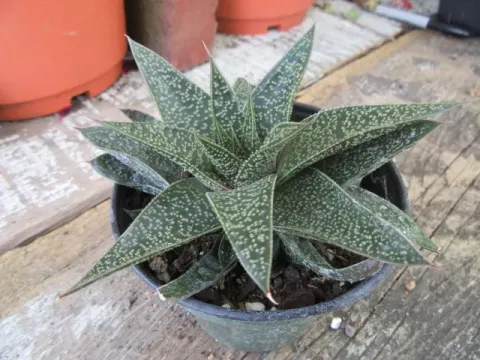
Gasteraloe
x Gasteraloe
Gasteraloe is an intergeneric hybrid resulting from the crossbreeding of Gasteria and Aloe. It belongs to the Asphodelaceae family, combining the visual appeal of Gasteria with the hardiness and structural vigor typically associated with Aloe species.
What the section contains

Gasteraloe
The native habitat of its parent species is located in the arid zones of Southern Africa, which defines the plant's physiological adaptations. It thrives in environments characterized by long periods of drought and high solar radiation.
Cultivation requires a well-draining substrate specifically formulated for succulents. The medium must provide excellent aeration to prevent the roots from suffocating and to ensure rapid evaporation of surplus moisture.
The ideal temperature range for Gasteraloe is between 20°C and 25°C during the active growing season. A cooler dormant period with temperatures around 12°C to 15°C is recommended to support the natural metabolic cycle of the hybrid.
Bright, indirect light is essential for maintaining compact growth and vibrant leaf coloration. Direct afternoon sun should be avoided as it can cause significant stress and necrotic spots on the succulent foliage.
Root rot remains the primary threat to Gasteraloe due to poor drainage or excessive watering regimes. It is critical to allow the soil to dry out completely between irrigations to protect the plant from fungal decay.
Mealybugs are the most common pests, often sheltering deep within the leaf axils. Periodic inspections and the application of systemic insecticides are necessary to control these infestations before they spread across the plant population.
Spider mites may colonize the foliage during periods of low humidity, causing visible tissue damage. Maintaining an appropriate environment and using suitable acaricides can effectively manage and prevent these issues.
Fungal infections can develop if water collects in the center of the leaf rosettes. Proper cultural practices, such as precise watering and ensuring good ventilation, are the most effective ways to prevent such damage.
For large-scale cultivation, hygiene is paramount. Sterile pots and high-quality potting mixes are fundamental to preventing soil-borne pathogens and ensuring the long-term health of the hybrid crop.