
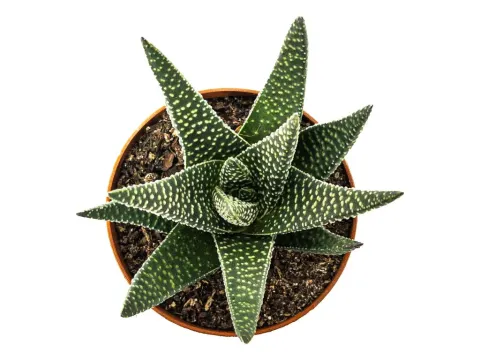
Gasteria
Gasteria Duval
Gasteria (Gasteria Duval) is a genus of succulent plants belonging to the Asphodelaceae family, native to the arid regions of Southern Africa. These plants are characterized by fleshy, often spotted leaves arranged in a basal rosette, designed to store water for survival in harsh, dry environments.
What the section contains

Gasteria
For optimal growth, the culture requires bright, indirect light; direct sunlight may cause leaf scorch and tissue damage. The preferred temperature range during the spring and summer months is between +18 °C and +25 °C, while winter dormancy should be maintained in cooler conditions between +12 °C and +15 °C.
The soil substrate must offer excellent drainage to prevent root rot, which is a common issue for succulents. A mixture composed of turf soil, leaf compost, and coarse-grained sand is highly recommended to ensure adequate aeration and moisture regulation.
Watering should be conducted sparingly, allowing the top layer of the substrate to dry out significantly between applications. During the winter period, the frequency of irrigation should be reduced to prevent saturation, although the root system should not be allowed to dry out completely.
Gasteria is primarily used as an ornamental plant for indoor horticulture and phytodesign. Due to its compact growth habit and relatively high tolerance to low-light conditions compared to other succulents, it is a staple in both residential and office environments.
The primary threat to Gasteria is root and stem rot caused by poor soil drainage and excessive soil moisture. When infected by fungi, the leaves become mushy, lose their structural integrity, and eventually turn dark, which usually leads to the death of the specimen.
Insect pests such as mealybugs and spider mites are the most common adversaries, feeding on the plant’s sap. These pests can be identified by a white, cottony residue in leaf axils or microscopic webs stretched across the undersides of the leaves.
Prevention involves maintaining a rigorous watering schedule and ensuring good air circulation around the rosette. It is essential to avoid overhead watering, as trapped droplets within the leaf axils provide a breeding ground for bacterial and fungal pathogens.
If an infestation is detected, physical removal using an alcohol-soaked swab is effective, followed by treatment with systemic insecticides if necessary. Infected or necrotic tissue should be excised immediately using a sterile blade to stop the spread of infection.
To promote long-term plant health, growers should avoid cold drafts and sudden temperature fluctuations, which can stress the plant and weaken its natural defenses. Refreshing the soil medium every few years helps maintain nutrient balance and reduces the risk of soil-borne diseases.