
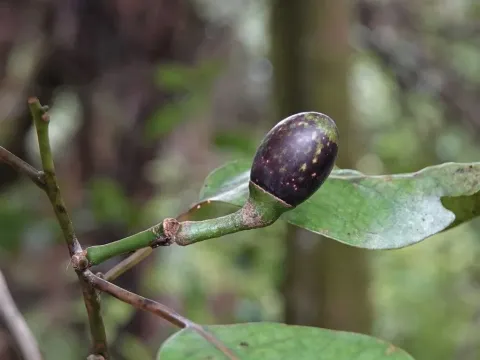
Litsea
Litsea
Litsea (genus Litsea) is a diverse group of evergreen trees and shrubs belonging to the Lauraceae family. The most widely cultivated species is Litsea cubeba, which is highly valued for its intense lemon-scented essential oil.
What the section contains
 Japanese Litsea
Litsea japonica
Japanese Litsea
Litsea japonica
 Korean litsea
Litsea coreana
Litsea accedentoides
Litsea accedentoides
Korean litsea
Litsea coreana
Litsea accedentoides
Litsea accedentoides
 Litsea acuminata
Litsea acuminata
Litsea acuminata
 Litsea angulata
Litsea artocarpifolia
Litsea artocarpifolia
Litsea angulata
Litsea angulata
Litsea artocarpifolia
Litsea artocarpifolia
 Litsea aurea
Litsea aurea
Litsea aurea
 Litsea castanea
Litsea confusa
Litsea confusa
Litsea castanea
Litsea castanea
Litsea confusa
Litsea confusa
 Litsea cordata
Litsea cordata
Litsea cordata
 Litsea cubeba
Litsea cubeba
Litsea cubeba
 Litsea elliptica
Litsea elongata
Litsea elongata
Litsea erectinervia
Litsea erectinervia
Litsea fenestrata
Litsea fenestrata
Litsea elliptica
Litsea elliptica
Litsea elongata
Litsea elongata
Litsea erectinervia
Litsea erectinervia
Litsea fenestrata
Litsea fenestrata
 Litsea ferruginea
Litsea ferruginea
Litsea ferruginea
 Litsea firma
Litsea firma
Litsea firma
 Litsea glutinosa
Litsea glutinosa
Litsea glutinosa
 Litsea grandis
Litsea lancifolia
Litsea lancifolia
Litsea ledermannii
Litsea ledermannii
Litsea grandis
Litsea grandis
Litsea lancifolia
Litsea lancifolia
Litsea ledermannii
Litsea ledermannii
 Litsea ligustrina
Litsea ligustrina
Litsea ligustrina
 Litsea machilifolia
Litsea machilifolia
Litsea machilifolia
 Litsea monopetala
Litsea monopetala
Litsea monopetala
 Litsea myristicifolia
Litsea ochracea
Litsea ochracea
Litsea penangiana
Litsea penangiana
Litsea myristicifolia
Litsea myristicifolia
Litsea ochracea
Litsea ochracea
Litsea penangiana
Litsea penangiana
 Litsea persella
Litsea persella
Litsea persella
 Litsea populifolia
Litsea pruriens
Litsea pruriens
Litsea resinosa
Litsea resinosa
Litsea populifolia
Litsea populifolia
Litsea pruriens
Litsea pruriens
Litsea resinosa
Litsea resinosa
 Litsea reticulata
Litsea robusta
Litsea robusta
Litsea reticulata
Litsea reticulata
Litsea robusta
Litsea robusta
 Litsea rubescens
Litsea rubescens
Litsea rubescens
 Litsea salicifolia
Litsea salicifolia
Litsea salicifolia
 Litsea teysmanni
Litsea timoriana
Litsea timoriana
Litsea tomentosa
Litsea tomentosa
Litsea umbellata
Litsea umbellata
Litsea teysmanni
Litsea teysmanni
Litsea timoriana
Litsea timoriana
Litsea tomentosa
Litsea tomentosa
Litsea umbellata
Litsea umbellata
 Mangeao
Litsea calicaris
Mangeao
Litsea calicaris
 Pondspice
Litsea aestivalis
Pondspice
Litsea aestivalis
Litsea
Native to Southeast Asia, including China and Vietnam, the plant thrives in humid subtropical climates. It requires consistent warmth and significant rainfall to reach its full development potential.
The ideal soil for Litsea is well-drained, nutrient-rich, and slightly acidic. Proper drainage is a critical requirement, as the plant's root system is susceptible to decay in waterlogged conditions.
Regarding light exposure, the plant prefers sunny locations but often requires shade during the initial seedling stage to prevent foliage burn and excessive dehydration.
Agricultural management involves routine pruning to maintain the desired canopy structure, alongside balanced fertilization to support the high metabolic rate required for oil synthesis in the leaves and fruits.
Litsea is susceptible to several fungal diseases, particularly those affecting the roots, such as Phytophthora. These are most common in areas with poor drainage and excessive moisture accumulation.
Pest pressure often comes from sap-sucking insects including aphids and spider mites. These pests not only reduce the overall vigor of the tree but can also act as vectors for viral pathogens.
Integrated Pest Management (IPM) strategies are highly recommended, focusing on maintaining biodiversity around the planting sites to encourage natural predators of common pests.
Sanitation practices, such as the prompt removal of dead or diseased woody tissue, play a vital role in preventing the spread of secondary infections throughout the plantation.
Soil management, including regular aeration and the application of organic amendments, helps strengthen the tree's natural resistance to soil-borne pathogens and environmental stress.
The commercial harvest of Litsea focuses on the fruit and leaves, which contain high concentrations of citral. The timing of the harvest is critical to ensuring the peak quality and yield of the essential oil.
The harvest method typically involves selective picking to ensure that only fruit at the correct stage of physiological maturity is collected, which maximizes the aromatic output.
Post-harvest handling is time-sensitive; the collected biomass must be transported to processing facilities quickly to prevent the degradation of volatile compounds through exposure to heat.
Steam distillation is the primary method used to extract the precious essential oil, requiring precision in temperature and pressure control to maintain the integrity of the product.
Effective post-harvest logistics ensure that the raw material retains its optimal chemical profile, which is essential for meeting the strict quality standards of the global flavor and fragrance industry.