
Litsea rubescens
Litsea rubescens
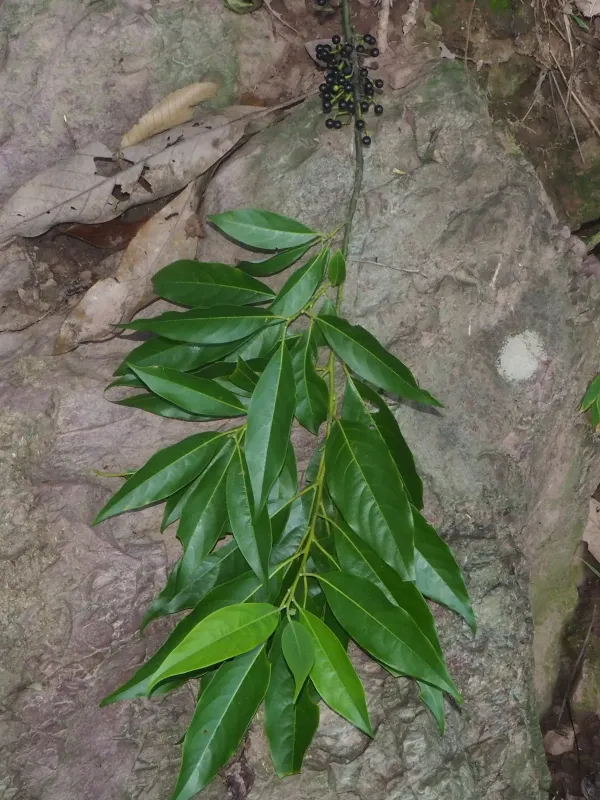
Description
Sowing dates
Litsea rubescens, a member of the Lauraceae family, is typically propagated through seeds or vegetative cuttings in agricultural settings. The selection of high-quality seeds is the first step toward establishing a healthy and productive plantation.
Seeds of this species exhibit dormancy, requiring stratification to ensure uniform germination. Nursery beds must be prepared with well-aerated, loose soil to support the delicate root systems of young seedlings.
Planting is usually scheduled for early spring, once soil temperatures have stabilized and the risk of frost has passed. Adequate spacing is essential to allow for future crown development and to facilitate mechanical weeding.
Seedlings require partial shade during their first year to protect them from excessive ultraviolet radiation. A consistent irrigation schedule is vital during the establishment phase to prevent water stress.
Transplanting to the permanent field site occurs when the plants are approximately two years old, at which point they possess a sufficiently robust root system for successful field adaptation.
Growing requirements
As a subtropical species, Litsea rubescens thrives in regions with warm, stable temperatures. It is sensitive to extreme cold, which can damage the tender shoot tips and reduce the plant's overall vigor.
The ideal soil for this crop is fertile, slightly acidic, and rich in organic matter. Excellent drainage is non-negotiable, as the plant is highly susceptible to root rot in waterlogged conditions.
Exposure to direct sunlight is crucial for the accumulation of essential oils, making southern or southeastern slopes the preferred locations for commercial cultivation. Adequate airflow is also necessary to prevent humidity-related issues.
Agronomic management involves regular nutrient application, particularly nitrogen and potassium, to support the rapid development of leafy biomass. Irrigation systems, such as drip lines, are often employed to maintain optimal moisture levels.
Formative pruning is essential to maintain tree health and ensure that the plant redirects energy into producing high-quality foliage and fruits, which are the primary sources of commercial products.
Yield
The economic potential of Litsea rubescens lies primarily in its essential oil production. The oil is extracted from the leaves and fruits, which are prized for their unique chemical profile and fragrance.
Yields are heavily dependent on the tree age and the intensity of care provided by the farmer. A well-managed plantation can reach peak productivity around five to seven years after planting.
The chemical composition and yield of the essential oil fluctuate based on seasonal variations. Sunny, moderately warm conditions generally promote higher concentrations of active compounds within the plant tissues.
Processing involves steam distillation or extraction techniques that require precise temperature control. Overheating the raw material during processing can degrade volatile components and diminish the final product quality.
Consistent output is achieved through systematic harvest planning and the use of modern harvesting technology that maximizes the retrieval of plant material while preserving the tree's future health.
Main diseases and pests
Litsea rubescens can be affected by sap-sucking insects like scale insects, which weaken the plant and may lead to stunted growth. Early detection through regular field scouting is critical for effective control.
Fungal diseases, such as leaf spot, may occur if the plantation density is too high or if air circulation is insufficient. These conditions are often mitigated by proper canopy management and timely pruning.
Root system health is paramount; therefore, monitoring soil moisture is the best prevention against soil-borne pathogens. Sites with poor drainage should be avoided or corrected through land-forming measures.
Integrated Pest Management (IPM) strategies, which prioritize biological control and cultural practices, are recommended to minimize the use of harsh chemicals that could affect product quality.
Prompt removal of infected or damaged branches helps contain potential outbreaks, ensuring the longevity and productivity of the entire plantation block.
Harvesting
Harvesting is performed during peak vegetative growth for leaves and upon full maturity for fruits. The timing is determined by observing the characteristic color change in the fruits.
Professional harvesting tools, including motorized pruners, are used to collect the necessary biomass efficiently. The cuts must be clean to prevent secondary infections at the pruning sites.
Post-harvest care is crucial; the collected material must be kept cool and shaded to prevent the loss of volatile oils through evaporation. Processing should begin within 24 hours of harvest.
Logistics play a vital role, with high-ventilation containers used to transport the raw material to the distillation facility without causing bruising or overheating.
Quality control at the point of harvest involves removing debris and damaged foliage, which ensures that only the highest quality raw material enters the processing chain.