
Litsea acuminata
Litsea acuminata
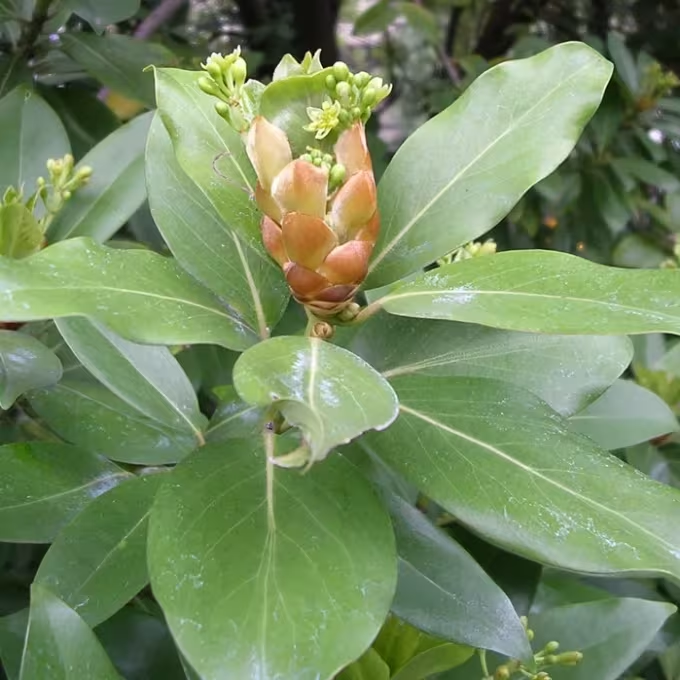
Description
Sowing dates
Litsea acuminata, belonging to the Lauraceae family, is an evergreen woody species typically propagated through seeds in nursery environments. It is highly recommended to sow the seeds immediately after harvesting, as they have a relatively short shelf life and lose their viability rapidly if they dry out.
Under natural conditions, germination occurs during the spring season when temperatures are consistently warm and soil moisture levels are adequate. In controlled nursery settings, seeds should be sown in a rich organic substrate while maintaining a germination temperature between 20-22 degrees Celsius.
To speed up the germination process, pre-sowing stratification in moist sand for 30-60 days is often employed. The seeds should be buried at a depth of 2-3 centimeters, ensuring the soil remains consistently moist but not waterlogged throughout the entire germination period.
Seedlings are transplanted into individual containers or prepared beds once they reach the two-leaf stage. During their first year, young plants require shading from intense direct sunlight to support the successful establishment and development of a robust root system.
Outplanting to the final site is carried out when the saplings attain a height of 30-40 centimeters, which usually occurs during the second year of growth. The onset of the rainy season is considered the optimal time for transplanting to ensure high survival and establishment rates.
Growing requirements
This crop has specific climatic requirements, favoring tropical and subtropical zones characterized by high humidity levels. It performs best in sheltered locations that are protected from strong winds and sudden, drastic temperature fluctuations that could damage the canopy.
Litsea acuminata is demanding regarding soil composition, requiring loose, fertile loam with excellent drainage properties. Soil waterlogging is a critical limiting factor, as it frequently leads to root rot and can cause rapid decline and mortality in the plant population.
For optimal growth, the soil pH should range between 5.5 and 6.5, which is typical for forest-derived red or yellow soils. Consistent enrichment with organic matter significantly boosts wood growth rates and enhances the accumulation of essential oils within the leaf tissue.
Regarding light exposure, the species is moderately shade-tolerant; however, for commercial biomass production, moderate indirect sunlight is preferred. Excessive shade can lead to a slowed photosynthetic rate, which directly correlates with lower essential oil yield and quality.
Consistent watering is essential, particularly during the active vegetative growth phase, while maintaining a careful balance to avoid excessive moisture. During periods of drought, the plant may respond by shedding leaves or experiencing tip dieback in young branches.
Yield
The economic value of Litsea acuminata is primarily derived from its high-quality essential oil, which is concentrated in both the leaves and bark. The maximum oil yield is obtained when harvesting young leaves during the active flowering stage, when citral concentrations peak.
Biomass productivity depends heavily on planting density and the implementation of sound agrotechnical practices, including balanced fertilization. In commercial plantations, well-managed fields can produce several tons of biomass per hectare suitable for industrial distillation.
Litsea essential oil is highly sought after in the perfume, cosmetic, and food industries due to its intense citrus-like fragrance. Standardizing the harvest process ensures a stable concentration of key components like citral, meeting the strict requirements of international markets.
Beyond oils, the timber of this species is valued for its durability and natural resistance to insect infestation, making it useful in furniture manufacturing. This multi-purpose nature makes Litsea a highly attractive candidate for sustainable integrated agricultural enterprises.
The first economically viable biomass harvest typically occurs 3-5 years after the saplings are established in the field. As the trees age, their productivity increases, provided that regular pruning and soil fertility maintenance are strictly followed.
Main diseases and pests
Litsea acuminata is susceptible to several fungal diseases, especially in environments with high humidity and insufficient crown ventilation. Root rot, caused by soil-borne pathogens, is the most severe threat when drainage is poorly managed within the plantation site.
Powdery mildew may affect the foliage, particularly in sheltered or shaded areas with poor airflow, causing stunted or distorted young shoots. Management involves timely pruning for better circulation and the preventative use of biological fungicides to mitigate infection risks.
Pests such as aphids and spider mites can cause significant damage by feeding on young leaves, which drains the plant's resources and stunts growth. These outbreaks often peak during dry spells when the plant's natural defenses may be temporarily weakened.
Larvae of certain leaf-eating insects may damage the canopy, leading to reduced overall biomass production. Utilizing an integrated pest management (IPM) approach allows producers to control insect populations effectively without relying on harsh synthetic chemicals.
Overall plantation health depends on rigorous adherence to sanitary practices, including the removal of debris where pathogens might overwinter. Strong, healthy trees generally exhibit high natural resistance to common local pathogens, reducing the need for extensive intervention.
Harvesting
Harvesting the leaves of Litsea acuminata is performed either manually or through specialized mechanical equipment designed for medicinal and aromatic crop processing. It is crucial to schedule harvesting during the early morning hours, once dew has evaporated, to maximize oil retention.
Harvested biomass must be transported to processing facilities immediately to prevent fermentation and the loss of volatile essential oils. Storing fresh biomass in large piles is strictly prohibited due to the risk of internal heat buildup, which severely degrades oil quality.
If temporary storage is required, the raw material should be spread in thin layers in a well-ventilated, shaded area away from direct sunlight. Advanced drying techniques are recommended to preserve the integrity of biological compounds within the leaf material.
Pruning branches during the harvest acts as a structural management tool, stimulating the growth of side shoots for the next season. Systematic and cyclical pruning is a key factor in maintaining long-term high productivity across the plantation lifecycle.
Quality control prior to distillation is an essential step, involving the assessment of essential oil content in each batch. This ensures that the final product adheres to global standards for quality and purity in the aromatherapy and cosmetic industries.