
Litsea cordata
Litsea cordata
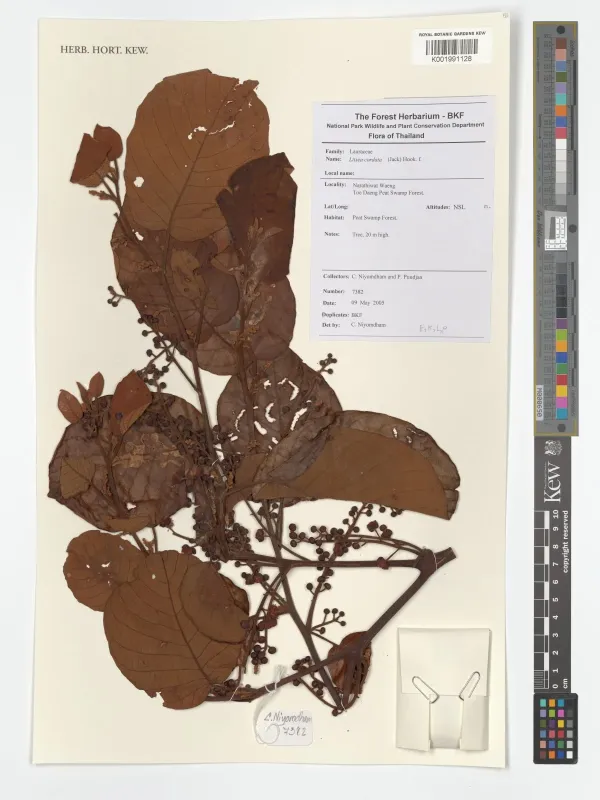
Description
Growing requirements
Litsea cordata is an evergreen tree belonging to the Lauraceae family, naturally occurring in the tropical rainforests of Southeast Asia. This species is highly valued for its aromatic properties and its distinctive cordate (heart-shaped) leaves.
The cultivation of Litsea cordata requires a stable tropical climate with high humidity and consistent warm temperatures, ideally ranging between 22 and 30 degrees Celsius. It is highly sensitive to frost and cannot tolerate temperatures dropping below freezing point.
Soil requirements for this crop include well-drained, fertile loam that is slightly acidic to neutral in pH. Because the species is prone to root rot, ensuring excellent drainage is critical for its long-term health and development.
In terms of agricultural management, the tree requires moderate shade during its juvenile stage, transitioning to full sun as it matures. Regular irrigation is necessary, but it must be carefully controlled to avoid waterlogging the soil profile.
Economically, Litsea cordata is utilized primarily for its essential oils, which are distilled from various parts of the plant. These oils are in high demand within the cosmetic and pharmaceutical industries for their antimicrobial and fragrant qualities.
Main diseases and pests
Fungal diseases constitute the primary threat to Litsea cordata, particularly when growing conditions involve excessive soil moisture or poor air circulation. Root rot and collar rot are common issues caused by pathogenic soil fungi in poorly managed plantations.
Common pests include scale insects and mealybugs, which tend to infest the undersides of leaves and young stems. These pests weaken the tree by extracting sap and can lead to the growth of sooty mold, which impairs the plant's photosynthetic efficiency.
Spider mites can also become a significant problem in drier environments or enclosed nursery spaces. These mites cause stippling and yellowing of the foliage, potentially leading to widespread defoliation if left untreated.
Integrated pest management (IPM) practices are highly recommended to keep these threats under control. This involves monitoring population levels and utilizing selective biological control agents to minimize chemical input into the environment.
Regular maintenance pruning is essential to improve airflow through the canopy, which naturally reduces the risk of fungal outbreaks. Removing dead or diseased branches immediately helps in maintaining the overall phytosanitary status of the plantation.