

Reference · Crops
Juglandaceae
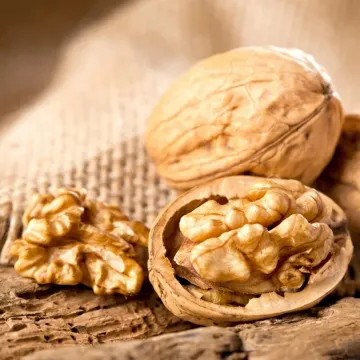
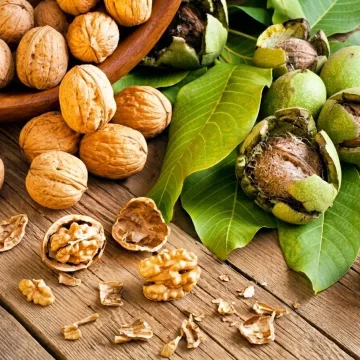
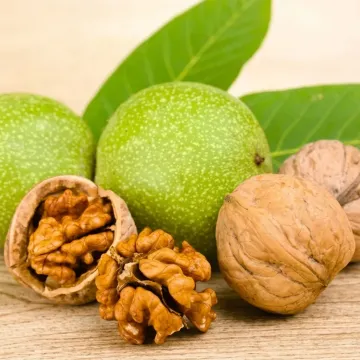
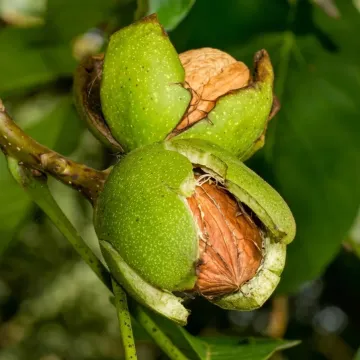
The Persian walnut (Juglans regia), also commonly known as the English walnut, belongs to the family Juglandaceae. It is a large, deciduous tree that is highly valued for both its nutrient-dense nuts and its premium-quality timber. As a staple crop in many temperate regions, it has been cultivated for centuries for its commercial and nutritional significance.
28
sections
What the section contains
 Bamber Walnut
Juglans notha
Bamber Walnut
Juglans notha
 Bixby nut
Juglans bixbyi
Bixby nut
Juglans bixbyi
 Bolivian walnut
Juglans boliviana
Bolivian walnut
Juglans boliviana
 California walnut
Juglans californica
California walnut
Juglans californica
 Carya
Carya Nutt.
4 items
Carya
Carya Nutt.
4 items
 Chinese walnut
Juglans cathayensis
Collapse walnut
Juglans collapsa
Chinese walnut
Juglans cathayensis
Collapse walnut
Juglans collapsa
 Cyclocarya
1 item
Cyclocarya
Cyclocarya
1 item
 Engelhardia
4 items
Hairy walnut
Juglans hirsuta
Engelhardia
Engelhardia
4 items
Hairy walnut
Juglans hirsuta
 Heartnut
Juglans ailanthifolia
Hickory
Carya
13 items
Heartnut
Juglans ailanthifolia
Hickory
Carya
13 items
 Hopei walnut
Juglans hopeiensis
Hopei walnut
Juglans hopeiensis
 Jamaican walnut
Juglans jamaicensis
Narrow-fruited walnut
Juglans stenocarpa
Jamaican walnut
Juglans jamaicensis
Narrow-fruited walnut
Juglans stenocarpa
 Neotropical walnut
Juglans neotropica
Neotropical walnut
Juglans neotropica
 Olanchana walnut
Juglans olanchana
Oreomunnea
Oreomunnea
1 item
Olanchana walnut
Juglans olanchana
Oreomunnea
Oreomunnea
1 item
 Pear-shaped walnut
Juglans pyriformis
Pear-shaped walnut
Juglans pyriformis
 Platycarya
 Siebold & Zucc.
Platycarya
Platycarya
1 item
Platycarya
Platycarya Siebold & Zucc.
Platycarya
Platycarya
1 item
 Pterocarya
6 items
Rhoiptelea
Rhoiptelea
1 item
Pterocarya
Pterocarya
6 items
Rhoiptelea
Rhoiptelea
1 item
 Soft walnut
Juglans mollis
Soft walnut
Juglans mollis
 Southern walnut
Juglans australis
Square-fruited walnut
Juglans quadrangulata
Southern walnut
Juglans australis
Square-fruited walnut
Juglans quadrangulata
 Walnut
Juglans L.
11 items
Wingnut
Pterocarya Kunth
Walnut
Juglans L.
11 items
Wingnut
Pterocarya Kunth
Marketplace
Products in this section · 12



Juglandaceae
Originally native to a region spanning from the Balkans to the Himalayas, the walnut has adapted to various climates across the globe. Today, major commercial production centers include China, the United States (primarily California), and countries throughout Eastern Europe and the Mediterranean. Its broad distribution is a testament to its adaptability and the high economic value of its harvest.
Botanically, the tree requires significant space due to its expansive canopy and deep root system. It thrives in well-drained, fertile soils with a neutral or slightly alkaline pH. Proper site selection is crucial for success, as the tree is sensitive to waterlogging and severe winter frosts. The tree relies on wind for cross-pollination, necessitating the inclusion of pollinator varieties within the orchard design to ensure optimal fruit set.
Effective agricultural management involves consistent irrigation, particularly during the critical stages of nut development. Nutrient management focuses on providing essential macronutrients like nitrogen and potassium to support vigorous growth and kernel fill. Pruning is essential in the early years to establish a strong structural framework and later for canopy thinning, which improves light penetration and disease prevention.
The economic utility of the walnut extends beyond its edible kernels, which are rich in omega-3 fatty acids and antioxidants. The wood is prized in furniture making, and the hulls are occasionally used in industrial applications. To maintain a productive orchard, growers must manage common threats such as walnut blight, anthracnose, and pests like the codling moth, employing a combination of cultural, biological, and chemical control methods.