
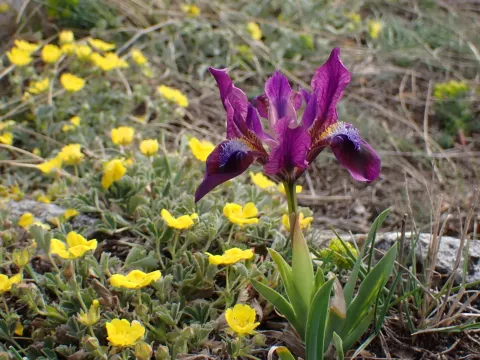
Dwarf iris
Iris pumila L.
Dwarf iris (Iris pumila L.) belongs to the Iridaceae family and is recognized as a miniature perennial species. Its natural range encompasses the steppe regions of Central and Eastern Europe.
What the section contains
Dwarf iris
This species is characterized by its compact habit, usually reaching a height of 10 to 20 centimeters. It features slender, sword-shaped leaves and early-season flowers, making it a staple in rock gardens and landscapes.
The plant demands full sun exposure to flourish and ensure consistent blooming. Insufficient light levels negatively impact the plant’s vigor and may cause the rhizomes to weaken over time.
Well-drained, neutral to slightly alkaline soil is ideal for cultivation. The species is highly sensitive to waterlogged conditions, which frequently lead to root rot if the soil structure is not sufficiently loose.
Cultural practices include occasional fertilizing and careful weed management. Given its shallow root system, surface cultivation must be performed with extreme caution to avoid physical damage.
The most persistent threat is soft rot, a bacterial disease triggered by excessive moisture and poor drainage. Once established, it can destroy the rhizome system within a short period.
Fungal infections, such as leaf spot (Heterosporium), are common under humid conditions. These spots can coalesce, leading to significant leaf necrosis and overall plant decline.
Insect pests, including aphids and iris borers, pose a recurring problem. Aphids typically colonize tender buds, while borers create tunnels within the rhizomes, significantly weakening the plant structure.
Slugs and snails can cause mechanical damage during early spring growth, consuming leaf tissue and creating entry points for secondary pathogens.
Effective management relies on maintaining dry conditions around the crown, ensuring adequate plant spacing for airflow, and applying targeted pesticides when early signs of infestation are detected.