
Iberian iris
Iris iberica
Description
Growing requirements
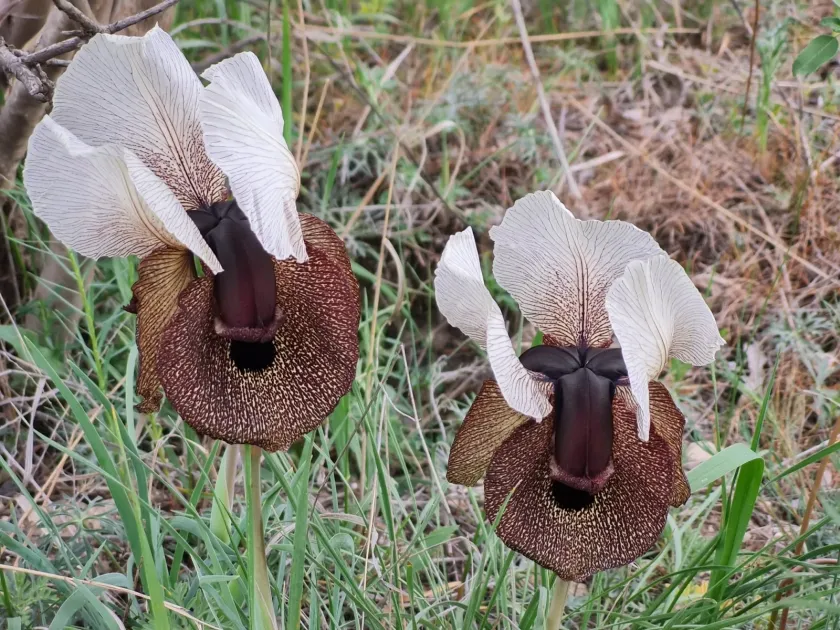
The Iberian iris (Iris iberica) is a distinct species belonging to the Iridaceae family. Known for its sophisticated and unusual floral architecture, it belongs to the oncocyclus group, which is highly valued by collectors and breeders for its unique appearance.
Originating from the rocky slopes of the Caucasus, this plant requires specific environmental conditions that mirror its natural mountain habitat. It thrives in well-drained, gritty soils with a neutral or slightly alkaline pH to ensure the roots remain healthy and rot-free.
The most critical aspect of the Iberian iris cultivation is managing the summer dormancy period. After flowering, the rhizomes require a period of warmth and almost complete drought to mature properly and prepare for the next growing season.
The species demands a full sun exposure throughout its vegetative cycle. In gardens located in regions with high humidity or frequent summer rains, it is often necessary to cultivate the plant under specialized glass coverings or on elevated, well-drained mounds.
Soil nutrient management should be precise, focusing on phosphorus and potassium to encourage robust rhizome development. Over-fertilization with nitrogenous compounds is discouraged, as it may lead to succulent growth susceptible to mechanical damage and pathogens.
Main diseases and pests
The primary threat to the Iberian iris is rhizome rot, caused by various fungal and bacterial pathogens that flourish in waterlogged soils. Ensuring excellent aeration and drainage is the most effective preventative measure against these devastating infections.
Pests such as iris borers can significantly damage the root systems, creating wounds that invite rot. Integrated pest management, including regular scouting and selective application of insecticides, is necessary to protect the plant's health during the spring growth flush.
Thrips may attack the foliage and floral buds, leading to unsightly deformities and a reduction in the overall vigor of the plant. Maintaining cleanliness in the growing area and removing dead plant debris helps to break the life cycle of these pests.
Rodents can also cause substantial destruction to the rhizomes during the dormant period when the ground is dry. Protective wire netting or gravel mulching around the roots can act as a deterrent to these mammals in outdoor garden settings.
- Use of coarse sand or gravel for soil amendment.
- Strict adherence to the summer drought cycle.
- Prompt removal of diseased tissues to prevent spread.