
Japanese iris
Iris ensata Thunb.
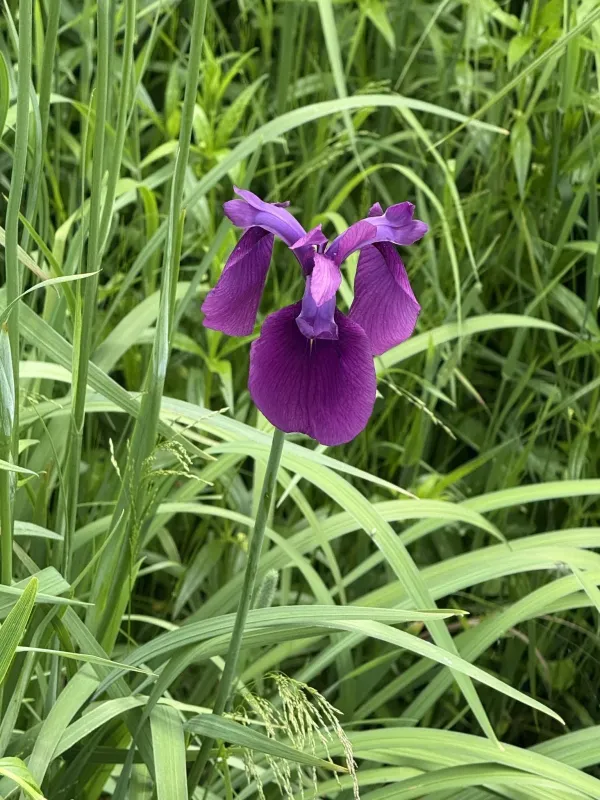
Description
Sowing dates
Seeds of Iris ensata require cold stratification to break dormancy, making autumn sowing or early spring planting after cold treatment essential.
Seeds should be sown shallowly in a peat-based, slightly acidic substrate that stays consistently moist to ensure successful germination.
Seedlings typically take several years to reach maturity and produce their first blooms, so patience is required when starting from seed.
For more predictable results, propagation by division is the preferred commercial and domestic method to maintain specific cultivar characteristics.
Divisions should be performed after the flowering season, ensuring each section has a healthy segment of rhizome and adequate root growth.
Growing requirements
The Japanese iris demands moist, acidic soil and is notoriously intolerant of lime or alkaline conditions, which can lead to chlorosis.
Constant moisture is vital; the soil should never be allowed to dry out completely, especially during the active growth and blooming periods.
Full sun exposure is necessary for optimal flower production, although partial shade is beneficial in regions with intensely hot summer climates.
Fertilization should be managed carefully, using acid-loving plant fertilizers and avoiding heavy concentrations of lime-based soil additives.
Winter protection is necessary in colder climates; a layer of organic mulch helps regulate soil temperature and protects the rhizomes from heaving.
Main diseases and pests
Leaf spot caused by various fungi is a common threat, especially in areas with high humidity, poor air circulation, or overhead watering practices.
Root rot occurs if the soil drainage is inadequate, leading to stagnant water that suffocates the roots and promotes anaerobic decay.
Pests such as iris borers, thrips, and aphids can significantly damage foliage and flower buds, reducing both growth vigor and decorative appeal.
Integrated Pest Management (IPM) practices, including the removal of dead foliage in late autumn, are effective for reducing overwintering populations of pests.
If chemical interventions are needed, targeted systemic fungicides and insecticides should be applied during the early stages of the growing season.