

Reference · Crops
Iris
Iris L.
Planting of Irises typically occurs in two primary windows, depending on the specific species and the local climatic conditions of the region.
16
items
What the section contains
 Bearded iris
Iris x barbata hort
Bearded iris
Iris x germanica L.
Bearded iris
Iris x barbata hort
Bearded iris
Iris x germanica L.
 Blackberry lily
Iris domestica Goldblatt & Mabb.
Blackberry lily
Iris domestica Goldblatt & Mabb.
 Bristled iris
Iris setosa Pall. ex Link
Bristled iris
Iris setosa Pall. ex Link
 Dutch Iris
Iris xiphium x Iris tingitana
Dutch iris
Iris xiphium L.
Dutch Iris
Iris xiphium x Iris tingitana
Dutch iris
Iris xiphium L.
 Dwarf iris
Iris pumila L.
Dwarf iris
Iris pumila L.
 Florentine iris
Iris florentina L.
Florentine iris
Iris florentina L.
 Iris histrioides
 (G. F. Wilson) S. Arn.
Iris histrioides
Iris histrioides (G. F. Wilson) S. Arn.
 Iris laevigata
 Fisch.
Iris laevigata
Iris laevigata Fisch.
 Iris latifolia
 (Mill.) Voss
Iris latifolia
Iris latifolia (Mill.) Voss
 Iris reticulata
 M. Bieb.
Iris reticulata
Iris reticulata M. Bieb.
 Iris tingitana
 Boiss. & Reut.
Iris tingitana
Iris tingitana Boiss. & Reut.
 Japanese iris
Iris ensata Thunb.
Japanese iris
Iris ensata Thunb.
 Pale iris
Iris pallida Lam.
Pale iris
Iris pallida Lam.
 Siberian iris
Iris sibirica L.
Siberian iris
Iris sibirica L.
Marketplace
Products in this section · 12


NATALI
Фгбну Федеральный Исследовательский Центр Всероссийский Институт Генетических Ресурсов Растений Имени Н.И.Вавилова
Iris
0
0
·
62
1 offer
1.54 €per pack
Buy

Iris
The first optimal period is immediately after the flowering season ends, allowing the plant to establish new roots before the dormancy begins.
The second preferred period is late summer to early autumn, which provides enough time for the rhizomes to root deeply before winter frost.
For seed propagation, sowing is best performed in late autumn as a cold-stratification process is required for high germination rates.
Proper spacing is crucial during planting to ensure adequate airflow between plants, which significantly reduces the risk of fungal outbreaks.
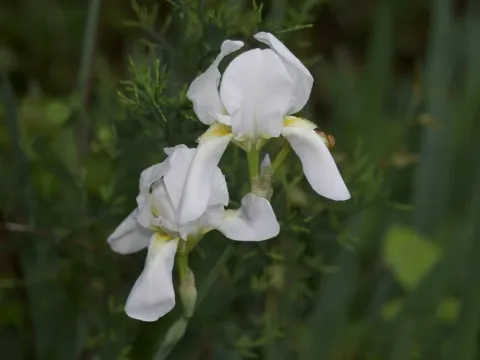
The genus Iris, belonging to the Iridaceae family, consists of numerous perennial species characterized by distinct rhizomatous or bulbous root systems.
Irises thrive in sunny locations with well-drained soil, as they are highly susceptible to rot if planted in areas with stagnant water.
The ideal soil pH is neutral or slightly acidic, and the ground should be rich in organic matter to support vigorous growth and blooming.
Consistent agrotechnical care, including manual weeding and careful cultivation of the topsoil, is necessary to prevent compaction around the roots.
Water management is critical: consistent moisture is required during the active growth phase, but the soil should be drier during the dormant period.
Crop yield in Iris cultivation is typically measured by the volume of commercial-grade rhizomes produced or the number of marketable flower stalks.
A healthy, established Iris clump can increase its density significantly every two years, allowing for routine division and high-volume plant propagation.
In the essential oil industry, the yield is determined by the harvest of the orris root, which requires careful cleaning and drying processes.
For cut flower production, growers aim for uniform stem height and bud quality, which requires high-intensity fertilization during the leaf-growth phase.
Maximum productivity is typically achieved between the third and fifth years of a planting cycle, after which the plants require division for renewal.
Bacterial soft rot is the most devastating disease for Irises, often triggered by excessive soil moisture and poor drainage in heavy clay soils.
Fungal leaf spot diseases are common in humid conditions and can be managed through the application of copper-based fungicides and proper hygiene.
Pests such as iris borers and aphids pose significant risks, as they can weaken the plant and serve as vectors for secondary viral infections.
Control strategies involve early detection, removal of infested foliage, and the implementation of crop rotation to break the life cycle of pests.
Maintaining a clean garden environment by removing dead plant debris prevents the overwintering of spores and insects near the crop.
Harvesting for essential oil production takes place in autumn, when the concentration of aromatic compounds in the rhizomes is at its peak.
Rhizomes are carefully excavated, washed to remove soil, and cut into segments before being dried under controlled temperatures to retain quality.
For floral use, harvesting occurs when the buds show color, ensuring the flowers open fully after being placed in water for retail or display.
Cut flowers should be stored in cool, sterile water with appropriate preservatives to extend their vase life during transport and sale.
Proper post-harvest handling includes sorting by size and maturity, which is essential for meeting industry standards and maximizing commercial value.