
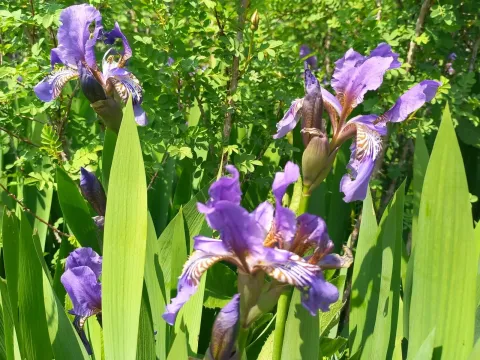
Iris alberti
Iris alberti
Iris alberti is a perennial herbaceous plant belonging to the Iridaceae family. This species is native to the mountainous regions of Central Asia, where it grows in rocky, well-drained soils.
What the section contains
Iris alberti
The plant features a thick, branching rhizome system that allows it to thrive in arid conditions and harsh mountain climates where soil moisture fluctuates significantly.
Its leaves are typically ensiform (sword-shaped), forming a dense basal rosette that is characterized by a glaucescent or blue-green color, contributing to its ornamental value.
Cultivation requires sites with excellent drainage, as the species is highly susceptible to root rot if water accumulates around the rhizome during the dormant season.
The plant exhibits remarkable tolerance to temperature extremes, making it suitable for rock gardens and borders where full sun exposure is guaranteed throughout the day.
The primary threats to Iris alberti are fungal pathogens that thrive in humid environments or poorly drained soils, often leading to rhizome decay.
Leaf spot diseases, such as heterosporium, can significantly impact the foliage, causing discoloration and necrosis during periods of prolonged dampness.
Pests like iris borers can damage the internal tissues of the rhizomes, which weakens the plant and leaves it vulnerable to secondary bacterial infections.
Effective management requires ensuring adequate spacing between plants to promote airflow and removing any dead foliage to prevent the spread of fungal spores.
When chemical intervention is necessary, the use of systemic fungicides or specific insecticides should be applied according to the manufacturer's recommendations for perennial ornamentals.