
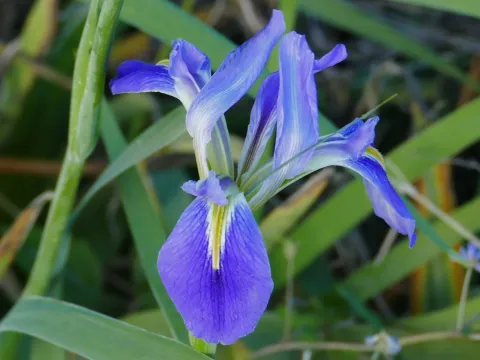
Hexagon iris
Iris hexagona
Propagation of Iris hexagona is most effectively achieved through the division of rhizomes, which should be performed in late summer immediately after the flowering season ends.
What the section contains
Hexagon iris
Seed propagation is also feasible but requires a period of cold stratification to break dormancy, ensuring a successful germination cycle during the following spring season.
When sowing, seeds should be placed in a damp, nutrient-rich potting medium at a shallow depth to maintain consistent moisture levels without inducing rot.
Young seedlings require adequate light levels and steady temperatures to promote vigorous root development before they are transplanted to their permanent outdoor locations.
Transplanting should be timed for the post-frost period when soil temperatures are stable, allowing the plants to establish themselves fully during the growing season.
The hexagon iris is a member of the Iridaceae family, naturally found in wetland habitats, swampy areas, and along the margins of rivers or ponds.
The plant thrives in full sun to partial shade environments and is uniquely adapted to high moisture conditions that would kill many other iris species.
Ideal soil conditions include acidic to neutral, organic-rich substrates that can retain water effectively without becoming stagnant or severely compacted.
Because it is a semi-aquatic plant, it performs exceptionally well in water gardens and is often used to provide natural filtration and aesthetic value at pond edges.
Maintenance involves ensuring the soil never dries out completely, especially during the active growth phases in late spring and early summer.
The most significant threats to Iris hexagona include fungal infections such as leaf spot, which are often exacerbated by poor air circulation and high humidity levels.
Pests like iris borers and thrips can cause structural damage to the foliage and flower buds, negatively impacting the plant's health and visual presentation.
Sanitation practices, including the removal of dead foliage at the end of the season, are essential to preventing the overwintering of pathogens near the rhizomes.
Integrated pest management strategies are recommended, focusing on maintaining plant vigor through proper soil nutrition and adequate spacing between specimens.
Monitoring for signs of infestation is crucial during the flowering period, as damaged blooms can serve as entry points for further microbial diseases.