
Pale iris
Iris pallida Lam.
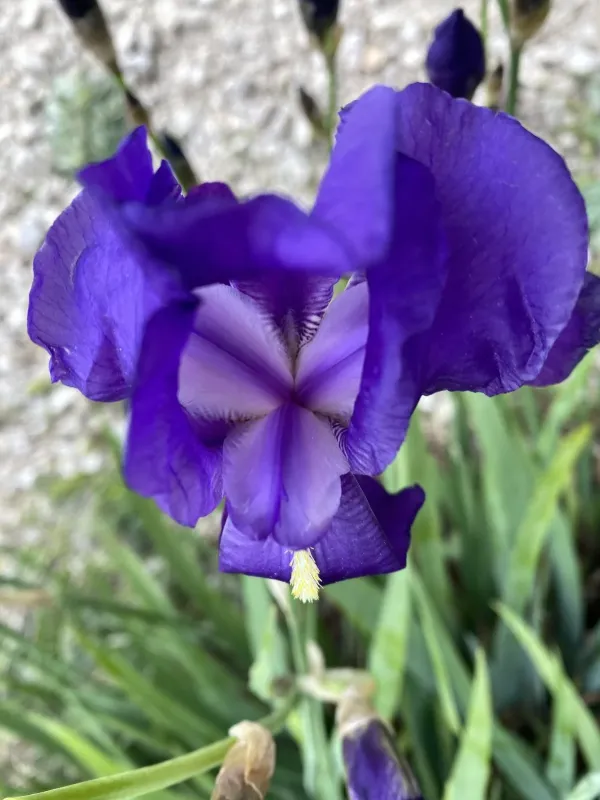
Description
Growing requirements
Iris pallida, commonly known as the pale iris, belongs to the Iridaceae family and is native to the rocky regions of the Dalmatian coast.
This perennial crop thrives in well-drained, calcareous soils and requires high solar radiation levels to ensure optimal rhizome development.
The plant is highly adaptable to various climatic conditions but demonstrates the best growth results in temperate environments with distinct seasonal changes.
Agrotechnical management requires preventing waterlogging, as the rhizomes are prone to decay in poorly aerated or excessively moist soil environments.
Fertilization regimes focus on potassium and phosphorus application, which enhance the structural health of the rhizomes and increase the concentration of aromatic compounds.
Main diseases and pests
Bacterial soft rot represents the most significant threat to Iris pallida plantations, often triggered by excessive rainfall or mechanical injury during field cultivation.
Leaf spot diseases, caused by various fungal pathogens, can severely compromise the plant's photosynthetic capability and overall vigor if left untreated.
Insect pests such as the iris borer and various aphid species frequently infest the foliage and rhizomes, necessitating vigilant monitoring and chemical or biological control.
Preventive strategies include maintaining proper spacing between rows to improve air circulation and implementing strict sanitation protocols during harvest.
Crop rotation is essential for minimizing soil-borne pathogens, ensuring that the fields remain suitable for subsequent iris production cycles.
Harvesting
The harvesting of Iris pallida is a major operational milestone, typically occurring three years after the initial planting of the rhizomes.
Field operations are scheduled for late autumn, ensuring that the plant has completed its annual growth cycle and relocated nutrients to the rhizome.
Mechanized lifting is employed to extract the rhizomes from the earth, followed by an immediate washing process to remove residual soil and debris.
Post-harvest handling involves the mechanical peeling of the rhizomes, as the outer layer contains impurities that must be removed before processing.
The final phase involves a critical curing process, where the rhizomes are dried and stored for several years to develop the desired orris fragrance.