
Iris aucheri
Iris aucheri
Description
Growing requirements
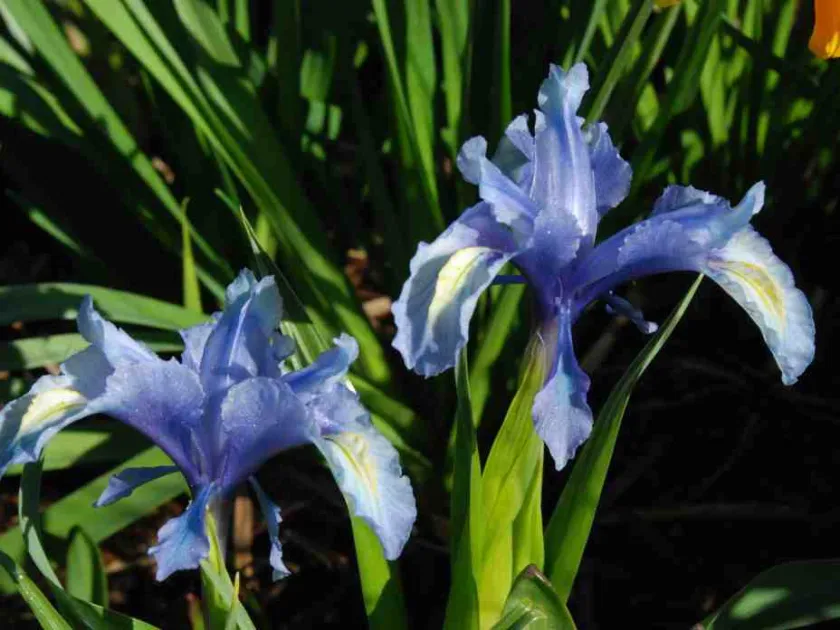
Iris aucheri is a fascinating bulbous perennial belonging to the Iridaceae family. Native to the mountainous regions of Iran, Iraq, and Turkey, this species has adapted to arid, rocky environments, making it a distinct choice for specialized rock gardens and well-drained borders.
The botanical structure of this plant features a robust bulb with fleshy roots that support a stem rising up to 40 cm. Its foliage is typically broad, displaying a beautiful glaucous or silvery-green hue that remains decorative throughout the short spring growing season.
Successful cultivation of Iris aucheri depends strictly on soil quality. The plants require gritty, fast-draining soil with an alkaline to neutral reaction. In heavy soils, incorporating coarse sand or gravel is essential to mimic their natural habitat and prevent the risk of waterlogging.
Environmental conditions play a crucial role in their survival. They flourish in full sun, which helps stimulate flower bud formation and ensures the bulbs ripen during their dormant period. Excessive humidity during summer, when the bulbs are inactive, is the most common cause of failure.
Agricultural management involves careful irrigation planning. Watering should be increased only during the spring growth phase and then completely tapered off as temperatures rise. During winter, protecting the bulbs from extreme moisture and frost in colder climates is highly recommended.
Main diseases and pests
The primary threats to Iris aucheri involve soil-borne pathogens, particularly fungi that cause soft rot and crown rot. These conditions thrive in poorly drained environments, emphasizing the need for strict moisture control and proper air circulation around the plants.
Pest management should focus on monitoring for aphids, which can damage new growth, and small bulb mites that infiltrate bulbs stored in damp soil. Proactive treatment with systemic fungicides and keeping the soil surface dry are the best ways to ensure plant health.