

Reference · Crops
Hydrangea
Hydrangea L.
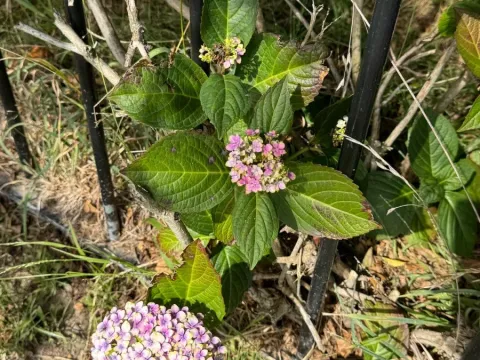
Hydrangea (Hydrangea L.) is a genus of flowering plants belonging to the Hydrangeaceae family. This genus encompasses a wide range of shrubs, small trees, and woody climbers, globally recognized for their ornamental value.
27
items
What the section contains
 Amami Oshima Hydrangea
Hydrangea amamiohsimensis (Koidz.) Y. De Smet & C. Granados
Amami Oshima Hydrangea
Hydrangea amamiohsimensis (Koidz.) Y. De Smet & C. Granados
 Bigleaf hydrangea
Hydrangea macrophylla (Thunb.) Ser.
Bigleaf hydrangea
Hydrangea macrophylla (Thunb.) Ser. x H. scandens (L. f.) Ser.
Bigleaf hydrangea
Hydrangea macrophylla (Thunb.) Ser.
Bigleaf hydrangea
Hydrangea macrophylla (Thunb.) Ser. x H. scandens (L. f.) Ser.
 Cardiandra alternifolia
Hydrangea alternifolia Siebold (syn. Cardiandra alternifolia (Siebold) Siebold & Zucc.
Cardiandra alternifolia
Hydrangea alternifolia Siebold (syn. Cardiandra alternifolia (Siebold) Siebold & Zucc.
 Chinese hydrangea
Hydrangea chinensis Maxim.
Chinese hydrangea
Hydrangea chinensis Maxim.
 Climbing hydrangea
Hydrangea anomala D. Don
Climbing hydrangea
Hydrangea anomala D. Don subsp. petiolaris (Siebold & Zucc.) E. M. McClint.
Climbing hydrangea
Hydrangea anomala D. Don subsp. petiolaris x Hydrangea seemannii L. Riley
Climbing hydrangea
Hydrangea anomala D. Don
Climbing hydrangea
Hydrangea anomala D. Don subsp. petiolaris (Siebold & Zucc.) E. M. McClint.
Climbing hydrangea
Hydrangea anomala D. Don subsp. petiolaris x Hydrangea seemannii L. Riley
 Climbing Hydrangea
Hydrangea hydrangeoides (Siebold & Zucc.) Bernd Schulz
Climbing Hydrangea
Hydrangea hydrangeoides (Siebold & Zucc.) Bernd Schulz
 Climbing hydrangea
Hydrangea scandens (L. f.) Ser.
Climbing hydrangea
Hydrangea scandens (L. f.) Ser.
 Dichroa febrifuga
Hydrangea febrifuga (Lour.) Y. De Smet & C. Granados
Hybrid Chinese and Bigleaf Hydrangea
Hydrangea chinensis Maxim. x Hydrangea macrophylla (Thunb.) Ser.
Hydrangea alternifolia-amamiohsimensis
Hydrangea alternifolia Siebold x Hydrangea amamiohsimensis (Koidz.) Y. De Smet & C. Granados
Dichroa febrifuga
Hydrangea febrifuga (Lour.) Y. De Smet & C. Granados
Hybrid Chinese and Bigleaf Hydrangea
Hydrangea chinensis Maxim. x Hydrangea macrophylla (Thunb.) Ser.
Hydrangea alternifolia-amamiohsimensis
Hydrangea alternifolia Siebold x Hydrangea amamiohsimensis (Koidz.) Y. De Smet & C. Granados
 Hydrangea integrifolia
 Hayata
Hydrangea integrifolia
Hydrangea integrifolia Hayata
 Hydrangea luteovenosa
 Koidz.
Hydrangea luteovenosa hybrid
Hydrangea luteovenosa Koidz. x Hydrangea macrophylla (Thunb.) Ser.
Hydrangea luteovenosa
Hydrangea luteovenosa Koidz.
Hydrangea luteovenosa hybrid
Hydrangea luteovenosa Koidz. x Hydrangea macrophylla (Thunb.) Ser.
 Hydrangea macrophylla and Hydrangea serrata hybrids
hybrids between Hydrangea macrophylla (Thunb.) Ser. and Hydrangea serrata (Thunb.) Ser.
Hydrangea macrophylla and Hydrangea serrata hybrids
hybrids between Hydrangea macrophylla (Thunb.) Ser. and Hydrangea serrata (Thunb.) Ser.
 Mountain hydrangea
Hydrangea serrata (Thunb.) Ser. var. serrata
Mountain hydrangea
Hydrangea serrata (Thunb.) Ser.
Mountain hydrangea
Hydrangea serrata (Thunb.) Ser. var. serrata
Mountain hydrangea
Hydrangea serrata (Thunb.) Ser.
 Oakleaf hydrangea
Hydrangea quercifolia W. Bartram
Oakleaf hydrangea
Hydrangea quercifolia W. Bartram
 Panicled hydrangea
Hydrangea paniculata Siebold
Panicled hydrangea
Hydrangea paniculata Siebold
 Rough-leaved hydrangea
Hydrangea aspera Buch.-Ham. ex D. Don
Rough-leaved hydrangea hybrid
Hydrangea aspera x Hydrangea integrifolia
Rough-leaved hydrangea
Hydrangea aspera Buch.-Ham. ex D. Don
Rough-leaved hydrangea hybrid
Hydrangea aspera x Hydrangea integrifolia
 Seemann's hydrangea
Hydrangea seemannii L. Riley
Seemann's hydrangea
Hydrangea seemannii L. Riley
 Silverleaf hydrangea
Hydrangea radiata Walter
Silverleaf hydrangea
Hydrangea radiata Walter
 Smooth hydrangea
Hydrangea arborescens L. x Hydrangea macrophylla (Thunb.) Ser.
Smooth hydrangea
Hydrangea arborescens L.
Smooth hydrangea
Hydrangea arborescens L. x Hydrangea macrophylla (Thunb.) Ser.
Smooth hydrangea
Hydrangea arborescens L.
Marketplace
Products in this section · 9


Hydrangea
The native distribution of these plants covers East Asia, particularly China and Japan, as well as North and South America. They have been extensively hybridized and cultivated to suit various environmental conditions across different continents.
Hydrangeas require moisture-retentive, well-draining soil with a slightly acidic profile. Soil pH levels directly influence the coloration of certain species, particularly the mophead varieties, which display different hues depending on aluminum availability.
The optimal cultivation site involves partial shade, protecting the plants from intense midday sun that can scorch the leaves and dehydrate the blooms. Adequate spacing is essential to ensure proper air circulation and reduce the risk of humidity-related pathogens.
Climate requirements vary by species, with many varieties showing high cold hardiness. Proper winter protection is crucial for less hardy species to prevent damage to the flower buds formed during the previous season.
Common fungal diseases affecting hydrangeas include powdery mildew, Botrytis blight, and leaf spots. These typically occur when environmental conditions, such as high humidity and poor ventilation, favor pathogen development.
Nutrient deficiencies, particularly iron-induced chlorosis, are frequent issues caused by incorrect soil pH levels. This manifests as yellowing of the foliage while the veins remain green, requiring immediate soil amendment.
Pests that frequently attack the crop include aphids, spider mites, and scale insects. These organisms can severely damage plant tissues and reduce the overall aesthetic and market value of the flowers.
Effective pest and disease control requires a balanced approach, integrating cultural practices, such as proper pruning and sanitation, with the judicious use of biological or chemical control agents.
Vigilant monitoring of plant health allows for early detection of issues, preventing large-scale infestations or disease outbreaks within commercial nursery or home garden settings.
Hydrangeas are primarily utilized in the cut flower industry and as staple elements in landscaping and landscape design. Commercial production focuses on timing harvests to meet specific market demands for floral arrangements.
Harvesting should occur when the flower heads are fully matured and feel firm to the touch. Immediate post-harvest treatment involves submerging stems in water to maintain turgidity and extend the vase life of the blooms.
The plant's productive life is maintained through systematic pruning, which promotes vigorous growth and the development of high-quality inflorescences in subsequent seasons.
In ornamental horticulture, the harvest of dried flowers is also a significant market segment, where specific varieties are processed for long-term interior decoration and craft purposes.
Maintaining high standards of quality during harvesting ensures that hydrangeas remain one of the most popular and commercially viable ornamental crops worldwide.