
Seemann's hydrangea
Hydrangea seemannii L. Riley
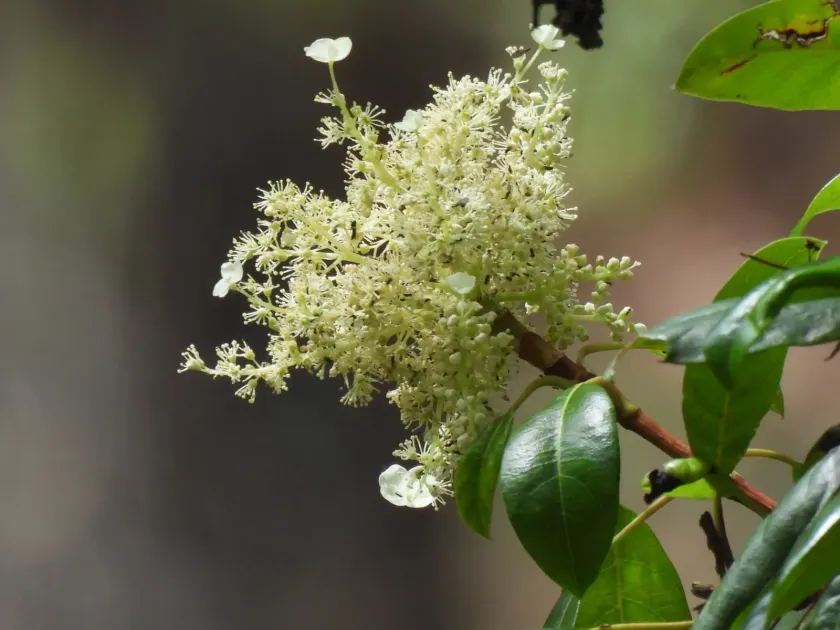
Description
Growing requirements
Seemann's hydrangea (Hydrangea seemannii) is a distinct species within the Hydrangeaceae family, characterized primarily by its evergreen nature and climbing growth habit.
Native to the high-altitude mountain forests of Mexico, this plant thrives in environments that offer consistent moisture, cool temperatures, and protection from extreme weather events.
The botanical structure of this hydrangea is specialized for vertical growth, utilizing aerial roots to adhere firmly to tree bark or rock faces in its natural habitat.
Cultivation requirements involve providing a rich, well-draining soil medium, ideally enriched with organic leaf mold or acidic compost to mimic natural forest floor conditions.
The plant demonstrates limited hardiness and requires a sheltered position in the garden, away from cold, drying winds that can easily damage its persistent leathery foliage.
Main diseases and pests
The health of Seemann's hydrangea is primarily challenged by fungal pathogens that thrive in stagnant, humid environments where air circulation is restricted.
Leaf spot diseases can cause significant aesthetic damage, manifesting as discolored lesions that weaken the plant if left untreated over several seasons.
Root rot remains a critical concern, usually resulting from excessive irrigation or the use of heavy, compacted substrates that prevent oxygen from reaching the roots.
Aphids and spider mites are typical pests, often appearing during warm spells and congregating on the underside of the leaves to feed on plant sap.
Effective management includes maintaining optimal plant spacing, ensuring good airflow, and implementing early intervention strategies using appropriate horticultural oils or fungicides.