
Silverleaf hydrangea
Hydrangea radiata Walter
Description
Growing requirements
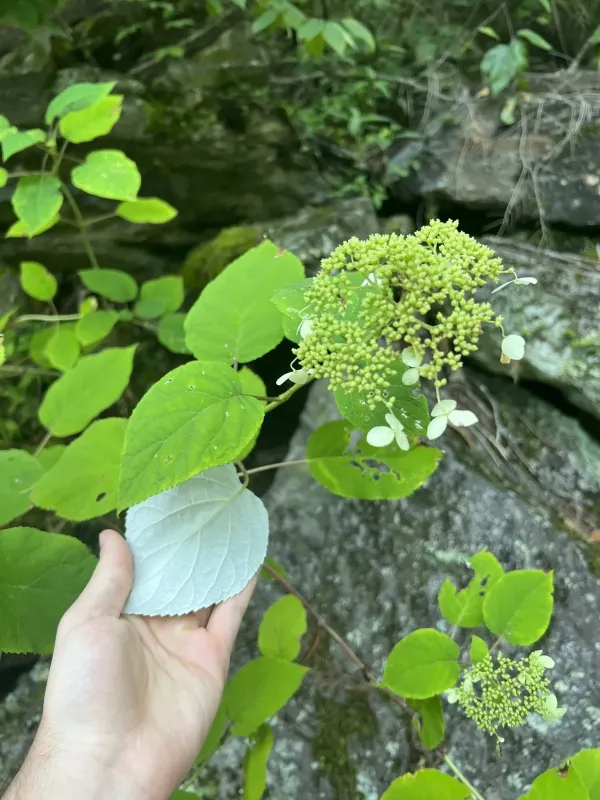
The Silverleaf hydrangea (Hydrangea radiata) is an ornamental deciduous shrub belonging to the Hydrangeaceae family. Native to the Appalachian region of the United States, it is distinguished by its unique white-backed leaves and airy inflorescences.
The culture thrives in fertile, moist, and well-drained soils. A crucial factor for successful growth is maintaining an acidic soil environment (pH 5.0–6.5), which is essential for nutrient uptake and vibrant foliage color.
Plant location should be carefully chosen. Ideally, it requires partial shade or a site with dappled sunlight. Exposure to direct intense midday sun can lead to leaf scorch and dehydration, significantly reducing the decorative value of the shrub.
Climate adaptation is key for Hydrangea radiata. It requires consistent moisture levels throughout the growing season. In areas with low atmospheric humidity, supplemental irrigation and heavy mulching around the root zone are recommended.
Routine maintenance involves annual pruning, typically conducted in early spring. This stimulates new growth and ensures that the plant retains a desirable shape while maximizing the potential for blooming on new wood.
Main diseases and pests
Fungal diseases such as powdery mildew and Botrytis blight are common threats. These pathogens flourish in stagnant air and high-humidity environments, necessitating good spacing between garden plantings.
Effective management includes the application of preventative fungicides and the physical removal of infected plant material. Ensuring proper airflow through strategic pruning helps to mitigate the risk of fungal spread.
Pests, particularly aphids and spider mites, can cause significant stress to the shrub during hot, dry spells. Regular inspection of the undersides of leaves is vital for early detection of these small insects.
If an infestation occurs, integrated pest management practices should be followed, starting with gentle washes and progressing to horticultural oils or targeted insecticides when populations exceed thresholds.
Nutritional imbalances, such as iron-deficiency chlorosis, may occur if the soil pH drifts out of the optimal range. Regular soil testing and the application of chelated iron can help restore the plant's health and vigor.