
Climbing Hydrangea
Hydrangea hydrangeoides (Siebold & Zucc.) Bernd Schulz
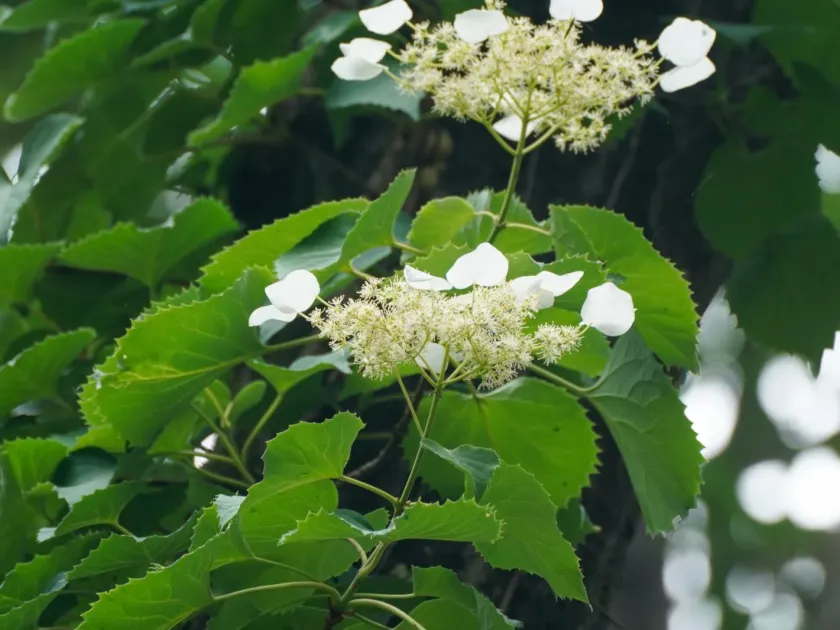
Description
Growing requirements
Climbing Hydrangea (Hydrangea hydrangeoides) is a deciduous woody vine belonging to the Hydrangeaceae family. Native to Japan, Korea, and the Russian Far East, it is characterized by its ability to climb by means of aerial rootlets that cling to bark, stone, or brick.
The plant thrives in partial to full shade, especially in warmer climates where the sun can scorch its broad leaves. It requires a rich, moisture-retentive, and well-draining soil with a slightly acidic pH to ensure healthy growth and vibrant flowering.
Cultural practices include consistent watering during the first few years of establishment. Once mature, the vine becomes quite hardy, though it benefits significantly from a thick layer of organic mulch to keep the roots cool and moist during summer heatwaves.
Regarding climate, this species is well-suited for temperate zones. It needs a sheltered location protected from strong, drying winds that can damage the developing foliage or cause winter tip-dieback on younger, less established stems.
In terms of usage, the Climbing Hydrangea is highly valued in landscaping as an architectural plant. It is widely used to soften the appearance of large masonry walls, fences, or to provide vertical interest in woodland-style garden settings.
Main diseases and pests
Powdery mildew is a common issue, particularly in humid and stagnant air conditions. To manage this, gardeners should ensure good airflow through the vine and avoid overhead watering that keeps the foliage wet for extended periods.
Aphids and spider mites are typical pests that infest the new growth of the vine. If an infestation occurs, insecticidal soaps or neem oil can be applied to mitigate the damage without harming beneficial predatory insects in the garden.
Root rot is a major threat if the plant is situated in waterlogged soil. Proper site selection and adding organic matter, such as peat or leaf compost, will improve soil structure and prevent the accumulation of excess water around the roots.
Leaf spot diseases may appear during wet springs, manifesting as dark lesions on the foliage. Sanitation is key; raking up and disposing of fallen leaves in autumn helps prevent the overwintering of fungal spores near the vine.
Chlorosis, which presents as yellowing leaves with green veins, indicates a nutrient deficiency or high soil pH. Regular application of chelated iron supplements and maintaining soil acidity will resolve this condition and restore normal leaf color.