
Dichroa febrifuga
Hydrangea febrifuga (Lour.) Y. De Smet & C. Granados
Description
Growing requirements
Dichroa febrifuga, commonly known as blue evergreen hydrangea, belongs to the Hydrangeaceae family. It is a perennial shrub native to the mountainous forest regions of East and Southeast Asia.
The plant thrives in partial shade and requires rich, well-draining, acidic soil to flourish. It is highly sensitive to drought and requires a consistent moisture supply to maintain its lush foliage and healthy root system.
In agricultural settings, providing stable environmental conditions is crucial. The species performs best in protected environments or forest-like microclimates where humidity levels remain high throughout the growing season.
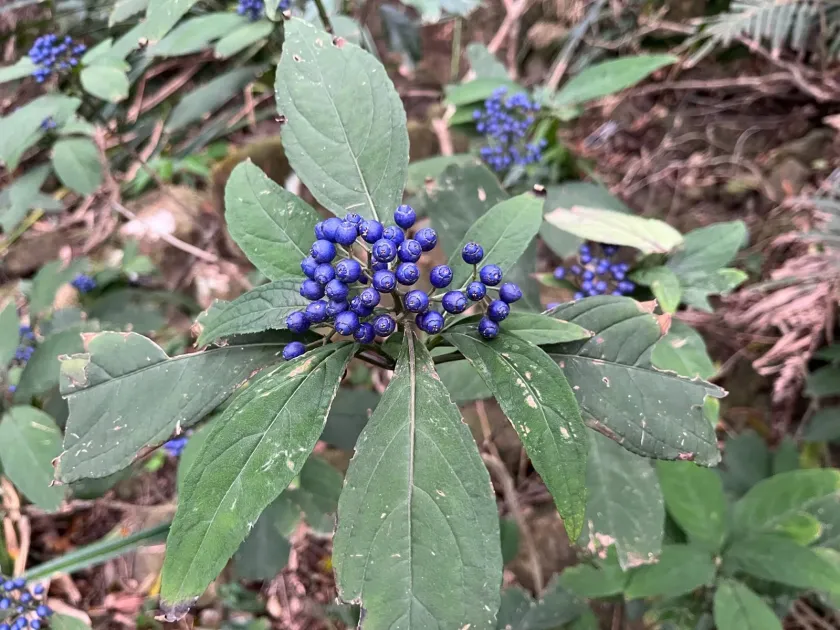
Botanically, it is recognized by its evergreen leaves, terminal corymbs of blue to purple flowers, and striking, fleshy blue berries. Its development is highly influenced by soil mineral composition and pH levels.
The primary economic value of this crop lies in its pharmacological applications. The plant contains high concentrations of febrifugine, a potent alkaloid traditionally used in oriental medicine for treating fever and malaria-related symptoms.
Main diseases and pests
The most significant threats to cultivation include root rot caused by stagnant water or compacted soil. Maintaining an efficient drainage system is essential to prevent fungal proliferation in the rhizosphere.
Pest management is focused on controlling aphids and spider mites, which can proliferate in dry indoor or greenhouse conditions. Regular monitoring and balanced nutrient management are key to keeping the crop resilient against biotic stress.