
Oakleaf hydrangea
Hydrangea quercifolia W. Bartram
Description
Growing requirements
The Oakleaf hydrangea (Hydrangea quercifolia) is a deciduous shrub belonging to the Hydrangeaceae family. Native to the southeastern United States, it is celebrated for its distinctive lobed leaves that resemble oak foliage and provide exceptional seasonal interest.
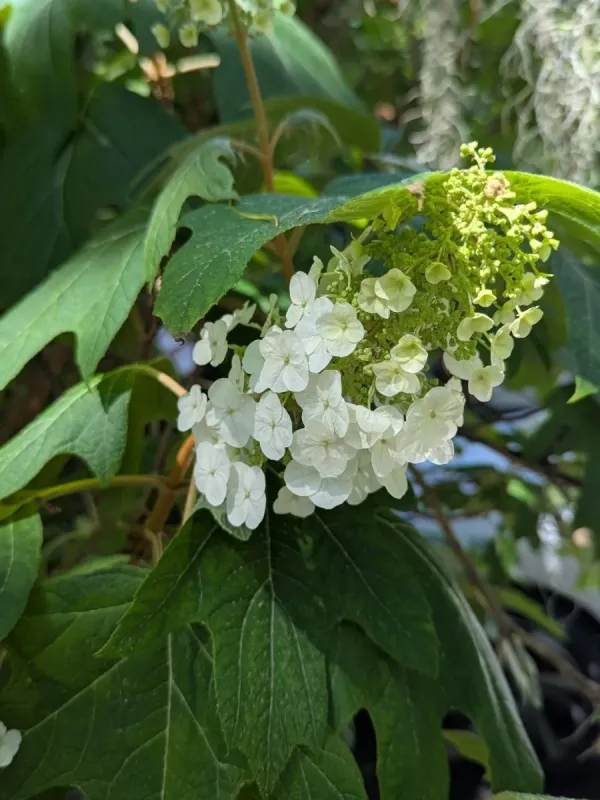
Botanically, the plant is characterized by its dramatic panicles of white flowers that gradually age to a pinkish hue. The exfoliating bark of mature specimens adds an architectural element to the garden, providing visual interest even during the dormant winter period.
The plant thrives in partial shade with moist, well-draining, acidic soil rich in organic matter. While it is more drought-tolerant than other hydrangea species once established, consistent soil moisture remains crucial for optimal growth and flowering performance.
Agricultural management involves annual pruning immediately after flowering to maintain the desired shape and size. Mulching the root zone is highly recommended to retain moisture and regulate soil temperature, which is essential for healthy root development.
In landscaping, this species serves as a focal point in borders, as a specimen plant, or in naturalized woodland settings. Its ability to tolerate varied light conditions makes it a versatile choice for landscape architects and residential gardeners alike.
Main diseases and pests
Susceptibility to fungal diseases, such as powdery mildew and leaf spot, is common in environments with poor air circulation or high humidity levels. Managing these pathogens requires proper spacing of plants and the application of appropriate fungicidal treatments when necessary.
Pests like aphids, spider mites, and scale insects can impact the health of the hydrangea. Early detection through regular monitoring allows for the effective use of horticultural oils or targeted insecticides to minimize damage to the foliage and buds.