
Mountain hydrangea
Hydrangea serrata (Thunb.) Ser. var. serrata
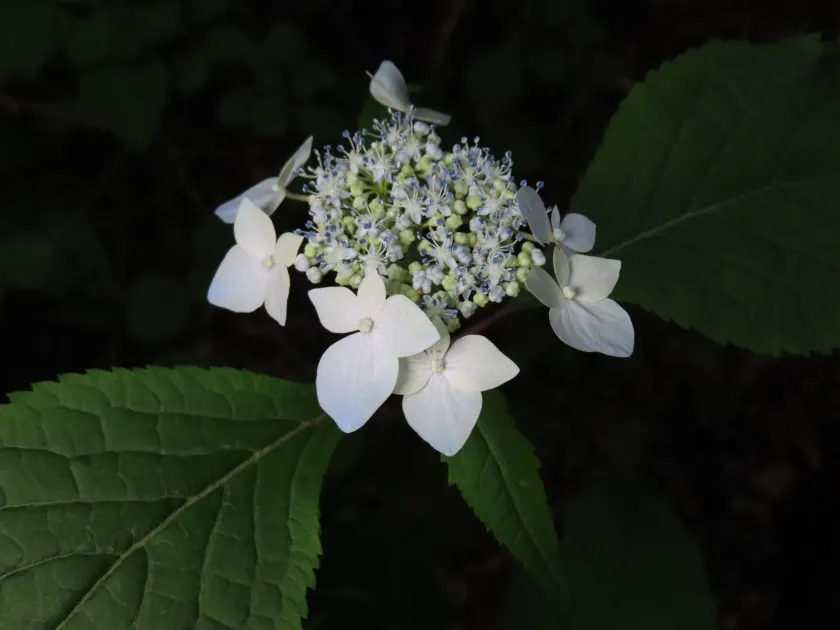
Description
Growing requirements
Mountain hydrangea (Hydrangea serrata) is a deciduous flowering shrub belonging to the Hydrangeaceae family. Native to the mountainous regions of Japan and Korea, this species is highly valued for its elegant form and unique flower coloration.
The plant features serrated, deep green leaves and complex corymb-type flower heads. The inner fertile florets are surrounded by decorative sterile sepals, creating a delicate, lace-cap appearance that distinguishes it from other common hydrangea types.
Success in cultivation requires a site with partial shade, as intense direct sunlight can scorch the foliage. The soil must be rich in organic matter, consistently moist, and acidic to maintain the plant's health and preferred blue flower color.
Proper agricultural practices include mulching to retain moisture and stabilize soil temperature. Fertilization should be focused on acidic-loving plant mixtures, applied during the active growth period to support vigorous blooming and root development.
Hydrangea serrata is suitable for woodland gardens, borders, and decorative container gardening. Because of its sensitivity to late spring frosts, it is essential to provide protection in colder climates to preserve next year's flower buds.
Main diseases and pests
The most common fungal threats include powdery mildew and Botrytis blight, which thrive in stagnant, humid environments. Maintaining proper plant spacing is essential to ensure adequate airflow.
Chlorosis is a frequent issue caused by alkaline soil conditions, where the lack of iron availability prevents the synthesis of chlorophyll, leading to yellowing leaves with green veins.
Pests such as spider mites and aphids are known to attack the plant, particularly in sheltered or drought-stressed conditions during the mid-summer season.
Integrated pest management involves monitoring the foliage regularly and using horticultural oils or insecticidal soaps if an infestation is detected at an early stage.
Good garden hygiene, including the removal of dead or diseased wood during the dormant season, significantly reduces the risk of recurrent infections and pest outbreaks.