
Mountain hydrangea
Hydrangea serrata (Thunb.) Ser.
Description
Growing requirements
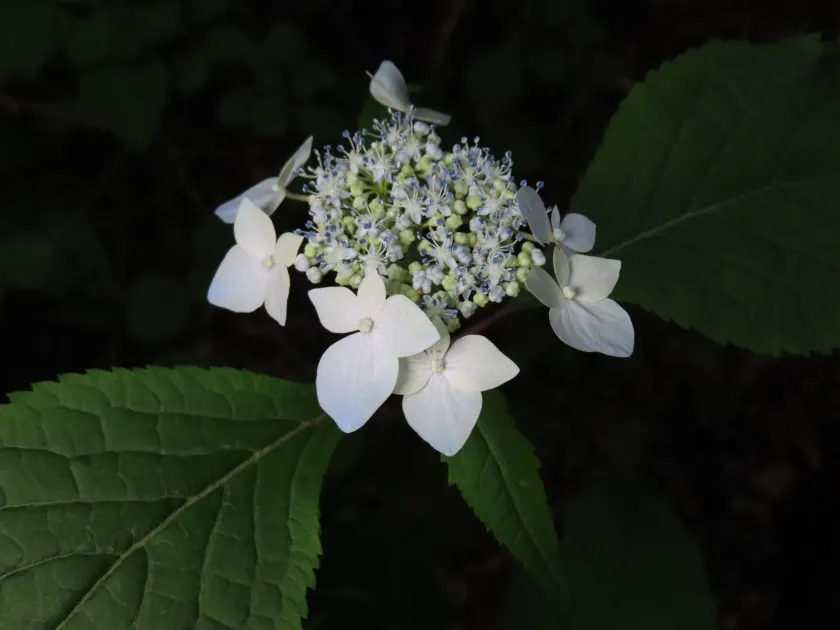
Mountain hydrangea (Hydrangea serrata) is a deciduous shrub belonging to the Hydrangeaceae family, native to the mountainous regions of Japan and Korea. It is prized in ornamental horticulture for its compact habit and lacecap-style inflorescences.
The plant thrives in partial shade and requires rich, acidic soil to maintain its health and bloom color. Soil pH is a critical factor, as lower levels promote vivid blue flower tones, while higher levels shift the color towards pink.
Water management is essential, as the species has shallow, fibrous root systems that are susceptible to drought stress. Regular watering and the application of a thick layer of organic mulch are necessary to preserve soil moisture throughout the growing season.
Climate adaptation involves protecting the shrub from harsh winter winds and extreme heat. In colder climates, winter protection is often required to ensure that flower buds, formed on the previous year's growth, are not damaged by late frosts.
Its primary use is in landscape architecture, where it serves as an excellent focal point in woodland borders or shade gardens. It is also well-suited for container gardening, providing flexibility in placement and easier care for individual specimens.
Main diseases and pests
Fungal issues such as powdery mildew and Botrytis blight are the most common health problems, typically manifesting in poorly ventilated or excessively damp environments. Proper spacing during planting is a key preventive measure.
Pests like aphids and spider mites can infest the foliage, particularly during dry spells. Regular monitoring and the application of horticultural oils or appropriate insecticides help manage these populations effectively.
Leaf chlorosis is frequently observed when soil pH rises too high or when micronutrients are deficient. Maintaining acidity levels and providing chelated iron supplements can prevent yellowing and maintain optimal foliage health.
Sanitation practices, including the removal of dead or diseased wood, are vital for maintaining plant vigor. It is recommended to perform pruning immediately after flowering to prevent the removal of new buds for the next season.
Integrated pest management, combined with consistent fertilization, keeps the plant resistant to environmental stressors. A healthy hydrangea with a well-developed root system is significantly less prone to both pests and seasonal diseases.