
Smooth hydrangea
Hydrangea arborescens L. x Hydrangea macrophylla (Thunb.) Ser.
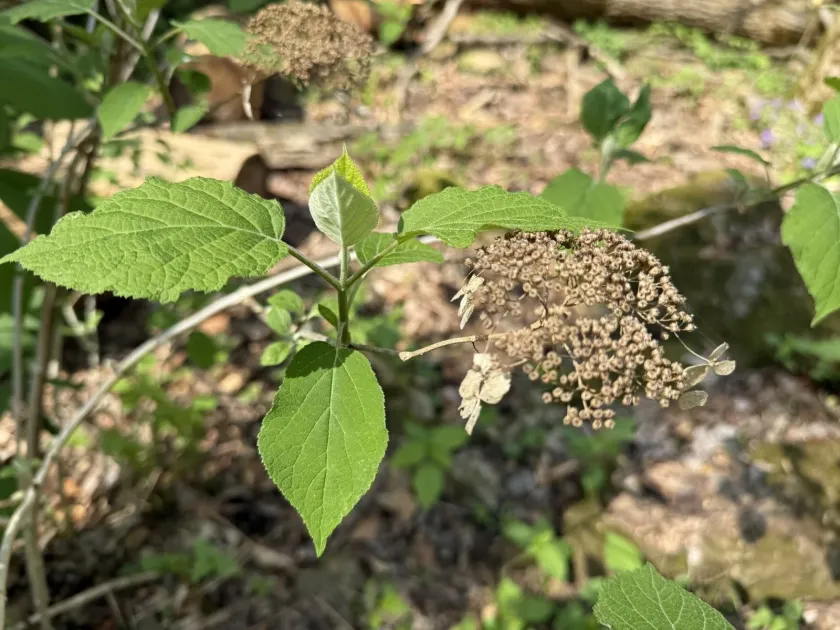
Description
Growing requirements
Smooth hydrangea (Hydrangea arborescens) is a deciduous shrub belonging to the Hydrangeaceae family. It is native to the Eastern United States, typically found in moist wooded areas and along stream banks.
This shrub is highly valued in horticulture for its hardiness and ability to thrive in various temperate zones. It grows to a height of 1.5 to 2 meters and features large, ovate leaves that turn vibrant green during the active growing season.
Successful cultivation requires rich, moist, and well-draining soil. The plant prefers a pH level that is slightly acidic to neutral, which ensures the optimal uptake of essential nutrients for lush flowering.
While the species can tolerate some sun, it performs best in partial shade. Excessive exposure to intense afternoon heat can cause the large flower heads to wilt and the leaves to suffer from scorching.
Maintenance involves providing consistent hydration, as the root system remains sensitive to drought. Applying organic mulch around the base of the plant helps maintain soil temperature and moisture levels effectively.
Main diseases and pests
Powdery mildew is a common fungal issue that affects the foliage during periods of high humidity and poor air circulation. Proper spacing between shrubs is crucial to prevent the spread of spores.
Iron chlorosis often occurs when the soil pH is too high, preventing the plant from absorbing necessary nutrients. This results in yellowing leaves with green veins, which can be corrected with chelated iron applications.
Pests such as aphids and spider mites can infest the soft new growth of the plant. Regular monitoring and the use of insecticidal soaps or neem oil are effective methods for managing pest populations.
Botrytis blight may affect flowers during wet, cool weather. It is important to remove any decaying plant matter to reduce the inoculum level and prevent the disease from spreading to healthy buds.
Routine spring pruning is essential for plant health and vigor. By removing dead wood and weak stems, gardeners can encourage stronger growth and ensure the shrub remains structurally sound throughout the summer.