
Hydrangea macrophylla and Hydrangea serrata hybrids
hybrids between Hydrangea macrophylla (Thunb.) Ser. and Hydrangea serrata (Thunb.) Ser.
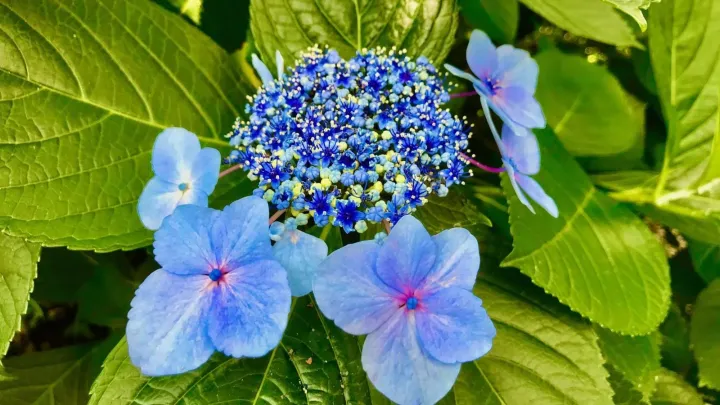
Description
Growing requirements
Hybrids between Hydrangea macrophylla and Hydrangea serrata belong to the Hydrangeaceae family. These cultivars combine the showy blooms of the bigleaf hydrangea with the enhanced winter hardiness and compact habit characteristic of the mountain hydrangea.
These plants thrive in rich, well-draining, slightly acidic soils with a pH between 5.0 and 6.0. Maintaining consistent soil moisture is crucial, as the shallow root system of these hybrids is highly susceptible to dehydration during summer heat waves.
Optimal placement involves partial shade settings, where the plants receive morning sunlight but are protected from intense afternoon rays. Mulching the base of the plants with organic matter is essential for root protection and water retention.
Bloom color in these hybrids is often variable, influenced by soil chemistry and the availability of aluminum ions. Gardeners can manipulate flower color from pink to deep blue by adjusting the pH level and soil amendments accordingly.
Fertilization should be handled carefully using acidic-type fertilizers specifically formulated for hydrangeas. Applications should begin in early spring as growth resumes and conclude by mid-summer to prevent weak, late-season growth susceptible to frost.
Main diseases and pests
Botrytis blight and powdery mildew represent the primary fungal threats, particularly in gardens with poor air circulation. Regular pruning to thin out the center of the shrub helps prevent these conditions.
Aphids and spider mites are common pests that target tender young foliage. Integrated pest management strategies, such as using horticultural soaps or neem oil, are typically effective if infestations are detected early.
Leaf chlorosis is frequently observed when the soil pH is too high or if the plant lacks access to iron. Correcting the soil chemistry is more effective than simple foliar sprays for long-term health.
Frost damage to terminal flower buds is the main threat in colder zones, as these hybrids typically bloom on old wood. Protective winter covering is highly recommended to ensure consistent annual flowering.
Sanitation is a key component of maintenance, involving the removal of dead or diseased wood. This practice reduces the risk of pathogens overwintering and ensures that energy is directed toward healthy new growth.