
Climbing hydrangea
Hydrangea anomala D. Don subsp. petiolaris x Hydrangea seemannii L. Riley
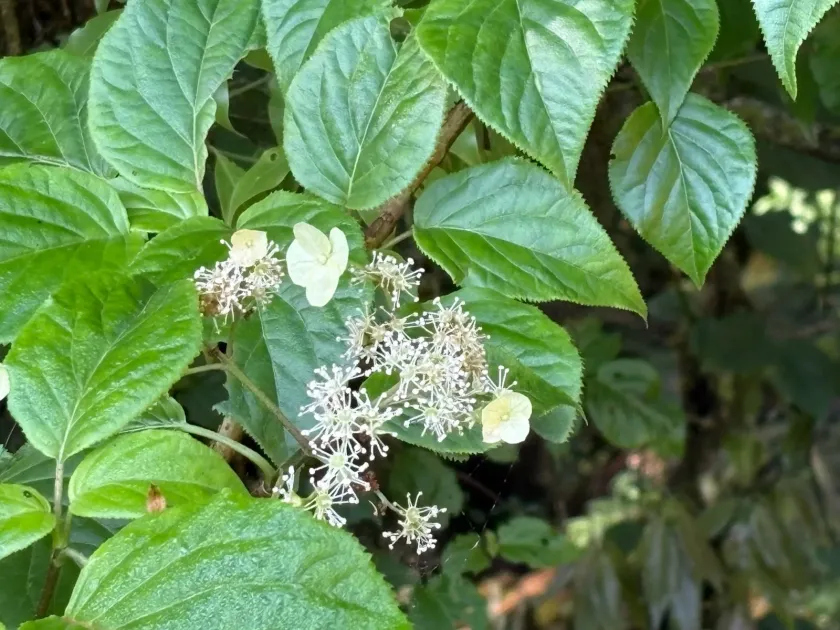
Description
Growing requirements
Climbing hydrangea (Hydrangea anomala subsp. petiolaris) is a vigorous, woody deciduous vine belonging to the Hydrangeaceae family. Native to the woodlands of Japan, Korea, and Sakhalin, this plant is well-known for its ability to scale tall trees and rock faces using aerial rootlets.
The plant thrives in partial shade to full shade environments. Exposure to harsh afternoon sun should be avoided as it can scorch the foliage. Ideally, it requires a cool, moist, and well-draining soil rich in organic matter with a slightly acidic pH level.
Regarding climate requirements, it is surprisingly hardy once established but needs protection from drying winds. In regions with harsh winters, young specimens should be mulched heavily and protected until they develop a robust root system and woody structure.
Cultural practices include consistent watering throughout the growing season, especially during hot spells. While it is a self-clinging vine, providing an initial structure like a trellis or a sturdy wall will help direct its growth in the desired landscape direction.
Its primary horticultural use is in vertical landscaping, providing excellent coverage for walls, fences, and large tree trunks. It is highly valued for its large, lacecap-style white flower clusters that bloom in early to mid-summer, creating a sophisticated visual appeal.
Main diseases and pests
Powdery mildew is the most common fungal disease, especially in dense plantings with poor airflow. Maintaining proper spacing and pruning to allow air movement through the foliage is essential for disease prevention.
Leaf spots caused by fungal pathogens can appear during wet, humid weather. Removing and destroying infected leaves helps to reduce the inoculum levels for the following season and protects the overall aesthetic of the vine.
Aphids can be problematic in the spring, feeding on the tender new growth. Infestations should be monitored and managed with horticultural soaps or neem oil to prevent curling and stunted leaf development.
Spider mites are a significant threat during periods of hot, dry weather. They feed on the undersides of leaves, causing a bronzed appearance. Regular misting and the use of appropriate miticides help maintain plant health during peak summer heat.
Root rot occurs if the plant is grown in waterlogged or poorly drained soil. Ensuring a loose, aerated soil structure at the time of planting is the best strategy to prevent oxygen deprivation in the root zone and fungal decay.