
Climbing hydrangea
Hydrangea anomala D. Don subsp. petiolaris (Siebold & Zucc.) E. M. McClint.
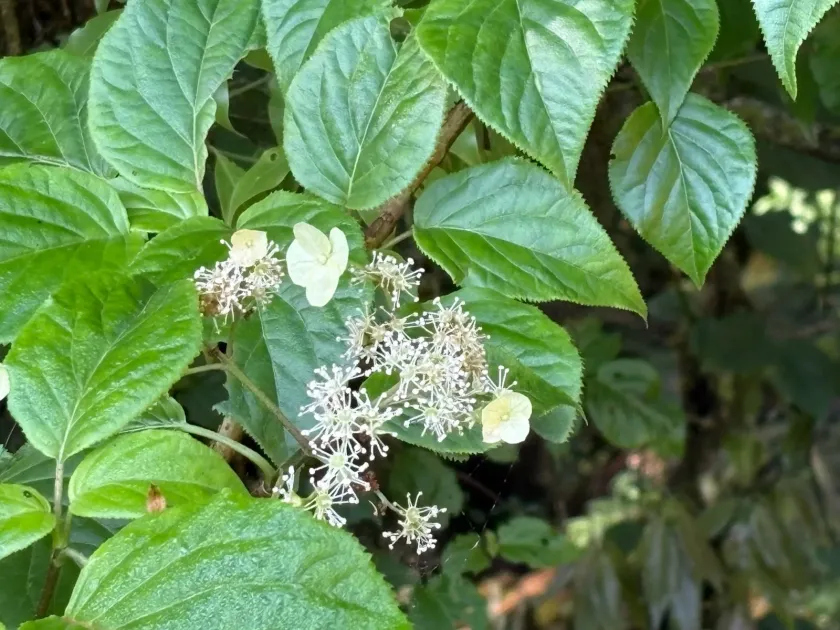
Description
Growing requirements
Climbing hydrangea (Hydrangea anomala subsp. petiolaris) is a woody deciduous vine belonging to the Hydrangeaceae family. Native to Japan, Korea, and the Russian Far East, this vigorous climber uses aerial rootlets to attach itself to surfaces such as stone walls, tree trunks, and fences.
This plant thrives in partial to full shade, making it an excellent choice for northern exposures where other flowering vines might fail to bloom. Direct sunlight during hot summer afternoons can scorch its dark green foliage, so protection from intense heat is essential for optimal health.
The ideal growing medium for this species is a rich, moist, and well-drained soil with a slightly acidic pH. Incorporating organic matter such as leaf mold or peat into the planting hole helps maintain the necessary moisture levels and provides essential nutrients for growth.
Cultural requirements involve consistent watering, especially during the first few years after transplanting. Once established, climbing hydrangea is relatively hardy, but it still benefits from mulching to conserve moisture and suppress weeds around the root zone, which is largely superficial.
In landscaping, it serves as a spectacular ornamental feature. Its ability to scale large vertical surfaces and provide late-spring to early-summer interest through fragrant, lacecap-style white flowers makes it a highly prized plant for professional garden design and historical garden restoration.
Main diseases and pests
Climbing hydrangea is generally robust, but it can be susceptible to several fungal diseases, particularly in humid or stagnant air environments. Powdery mildew is the most common issue, appearing as white patches on leaves, which can be managed with proper thinning and appropriate fungicides.
Botrytis blight or gray mold can affect flowers and buds during prolonged periods of wet weather. Improving air circulation by pruning and removing fallen debris from the base of the plant are effective cultural practices to minimize the risk of spreading fungal spores.
Spider mites are the most troublesome pests, particularly in dry and hot conditions. These small arachnids thrive in low-humidity environments, so misting the foliage or ensuring adequate soil moisture can act as a preventative measure against major infestations.
Aphids occasionally attack tender new growth, causing curling and stunted development. If necessary, a mild insecticidal soap application or a strong blast of water is usually sufficient to knock back the population without harming the plant's delicate tissues.
Monitoring the vine for signs of stress is crucial for long-term health. Regular inspections, especially during spring, allow for early identification of pests or nutrient deficiencies, enabling the gardener to take corrective action before the plant suffers significant damage.