
Climbing hydrangea
Hydrangea anomala D. Don
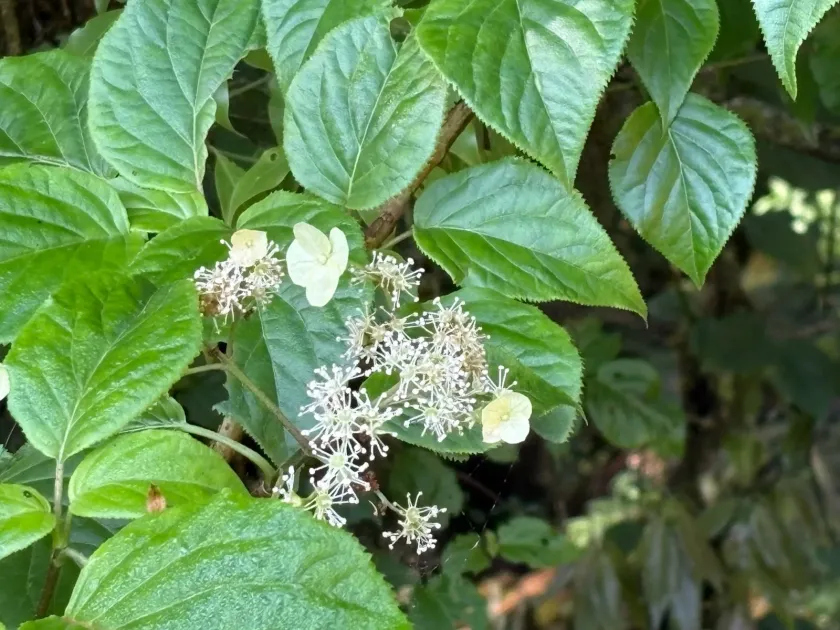
Description
Growing requirements
Climbing hydrangea (Hydrangea anomala) is a woody deciduous vine belonging to the Hydrangeaceae family. Native to the mountain forests of East Asia, this vigorous climber is highly valued for its ability to cover large vertical surfaces with dense foliage.
The plant thrives in partial shade to full shade, making it an excellent choice for north-facing walls. Unlike many other flowering vines, it does not require intense sunlight to bloom, though it appreciates bright, diffused light for optimal development.
Regarding soil preferences, it requires a moist, well-draining, and nutrient-rich medium with a slightly acidic pH. Incorporating leaf mold or peat moss into the planting hole helps replicate its natural forest floor habitat and promotes healthy root growth.
Cultural practices include providing a sturdy structure for support during the initial years of growth. Once established, the vine utilizes its aerial rootlets to adhere to brick, stone, or wood, significantly reducing the need for manual tying or training.
Maintenance involves annual pruning after the flowering period to keep the vine within its intended space. It is a slow-growing plant in its early stages, so patience is required during the first few years as it establishes its primary scaffold branches.
Main diseases and pests
Aphids are common pests that colonize the tender new growth of climbing hydrangeas. If left untreated, they can cause leaf curling and stunt the plant, but they are generally easy to manage with mild insecticidal soaps or neem oil applications.
Spider mites can be a problem in hot, dry conditions, causing a mottled appearance on the leaves. Regularly misting the foliage or ensuring that the plant is not under extreme drought stress can help deter these small pests effectively.
Powdery mildew is the most frequent fungal issue, characterized by a dusty white coating on leaves during humid weather. Maintaining proper spacing between plants and avoiding overhead watering are key strategies to prevent fungal infection.
Root rot occurs if the plant is grown in waterlogged or heavy clay soils. Ensuring proper drainage at the time of planting is essential to avoid the death of roots and the subsequent decline of the entire plant structure.
Regular monitoring of the foliage and stems is recommended throughout the growing season to detect early signs of infestation. Prompt removal of damaged leaves helps maintain the aesthetic value and overall health of the climbing hydrangea.