

Description
Symptoms
Symptoms become apparent only during the milk stage of grain development. Infected wheat ears often remain greener and display more widely spread glumes than healthy ears, appearing slightly distorted due to the developing spore masses.
Inside the husk, the grain is replaced by a "bunt ball," a hard, brittle structure filled with black, powdery teliospores. When these balls are crushed, they emit a distinct, unpleasant fishy odor caused by the chemical trimethylamine.
Infected plants may appear slightly stunted or display abnormal tillering compared to healthy specimens. The spikes can appear thinner, and the grain development is entirely disrupted by the replacement of endosperm with fungal spores.
During harvest, these bunt balls rupture, releasing millions of spores that contaminate the healthy grain. This process creates a significant issue for storage and marketability, as the entire harvest can become unusable.
Field diagnosis is most effective just before harvest. Crops heavily infected with common bunt will show signs of uneven maturation and often exhibit a grayish-brown appearance in the ear tissue as the spores mature.
Pathogen
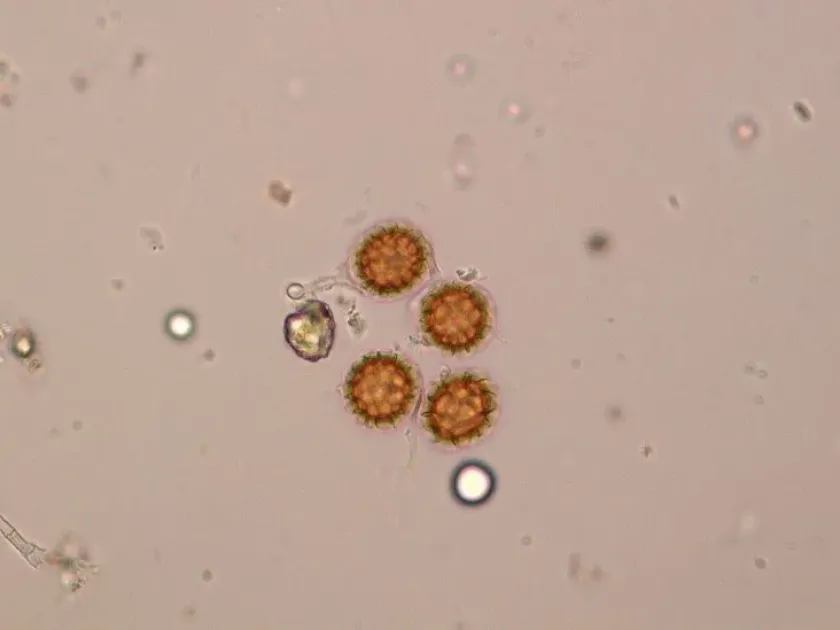
Common bunt is caused by basidiomycete fungi of the genus Tilletia, primarily Tilletia caries (also known as Tilletia tritici) and Tilletia laevis. These pathogens are highly specialized parasites that predominantly infect wheat crops, as well as rye.
The life cycle begins when teliospores germinate in the soil or on the surface of the seed. The pathogen penetrates the host seedling, growing internally within the plant tissues until the heading stage, without exhibiting external symptoms during the vegetative growth phase.
Infection primarily occurs from spores adhering to the seed surface or present in the soil. These spores are robust and can remain viable for several years, making the soil and infected seeds the two most important reservoirs for the disease.
The fungus acts as a biotroph, hijacking the plant’s nutrient pathways to facilitate its own reproductive growth. Instead of producing starch and protein in the grain, the infected plant produces a mass of fungal spores.
Biological success of the pathogen depends on the timing of spore germination. If the fungus and the cereal seedling begin their growth simultaneously, the probability of successful colonization is significantly higher.
Conditions for development
The development of common bunt is favored by cool soil temperatures, typically ranging from 5°C to 12°C. Prolonged cool autumns provide the ideal environment for the fungus to infect the seedling before it emerges from the soil.
Soil moisture levels of approximately 40-60% of field capacity are considered optimal for spore germination and infection. Extreme drought or waterlogged soil can inhibit the pathogen’s ability to infect the seedling.
Planting depth also plays a critical role in the infection rate. Seeds planted too deep will have a slower emergence, increasing the exposure time of the sensitive coleoptile to soil-borne spores.
Agro-ecological factors, including soil pH and microbial activity, can influence the longevity of spores in the ground. Healthy, biologically active soil can suppress the germination and persistence of many cereal pathogens.
The rate of plant growth during the early stages also influences susceptibility. Faster-growing varieties that quickly pass through the sensitive coleoptile stage are less likely to be successfully colonized by the fungus.
Why it matters
The primary economic impact is a direct loss of grain yield. Depending on the level of infection, wheat crops can experience significant losses as the number of viable, healthy grains is severely reduced or completely replaced by spores.
Grain quality is drastically lowered, rendering the batch unfit for flour production. The presence of spores results in a dark color, unpleasant smell, and poor baking quality, making the grain toxic to human and animal consumption.
Contaminated harvests require expensive cleaning and treatment processes. The high volatility of spores makes it difficult to prevent the spread of contamination once the bunt balls are broken during the harvesting process.
Common bunt acts as a hidden threat, as spores are invisible to the naked eye when present in low concentrations on seed surfaces. This necessitates rigorous lab testing of seed lots before sowing.
Secondary infections and reduced general immunity in host plants are common side effects of a common bunt infestation. Weakened plants are less capable of coping with environmental stresses like frost or nutrient deficiency.
Protection
The most effective strategy for managing common bunt is the systematic use of seed treatments with fungicides. Modern chemical treatments are highly effective at neutralizing spores present on the seed coat.
Adjusting sowing dates is an essential agronomic practice. By avoiding planting in cool soils, farmers can reduce the window of vulnerability for the seedlings, significantly lowering infection risks.
Selecting and breeding for bunt-resistant wheat varieties provides a sustainable and environmentally friendly approach to long-term disease management, reducing the reliance on chemical inputs.
Proper crop rotation is recommended to reduce the buildup of spores in the soil. A break of two to three years between susceptible cereal crops helps diminish the pathogen’s inoculum density in the field.
Using certified seed and high-quality cleaning equipment to remove damaged or small grains is a critical preventive measure. Ensuring the seed lot is free from bunt balls is fundamental to avoiding the introduction of the pathogen to new fields.
In brief
4
Affects crops
Biology
Pathogens and affected parts
Pathogens
Tilletia horrida· fungus
Common pea· fungus
Tilletia barclayana· fungus
Tilletia ajrekarii· fungus
Tilletia pennisetina· fungus
Tilletiacaries· fungus
Tilletiacaries tritici· fungus
Tilletiacaries laevis· fungus
Tilletiacaries foetida· fungus
Tilletia indica· fungus
Tilletia caries· fungus
Tilletia caries· fungus
Affected plant parts
whole plant
Content graph
Affects crops · 4
Reference
Connections · Common bunt
Most often together:
Marketplace
Products · 484
All 484
Wheat 262
Fungicides 114
Triticale 39
Barley 36
Oats 17
Insecticides, Acaricides 5
Corn 3
Sorghum 2
Sweet Corn 1
Rye 1
Tulips 1
Rootstocks 1


Cyclone k.s.
China National Chemical Construction Ningbo Import & Export Co.
Fungicides
0
0
6 offers
9.95 €per 1 l
Buy


NEMCHINOVSKIY 56
FGBNU Federal Research Center "Nemchinovka"
Triticale
0
0
2 offers
299.13 €per pack
Buy


NUTANS 553
Federal Agrarian Scientific Center of the South-East
Barley
0
0
1 offer
88.63 €per pack
Buy


Community
Discussion
No discussions yet — be the first.