

White root rot
Scytinostroma galactinum
Description
Symptoms
The earliest visible signs of infection include general plant decline, characterized by leaf chlorosis and premature defoliation. Affected trees or bushes often show reduced vigor and stunted growth.
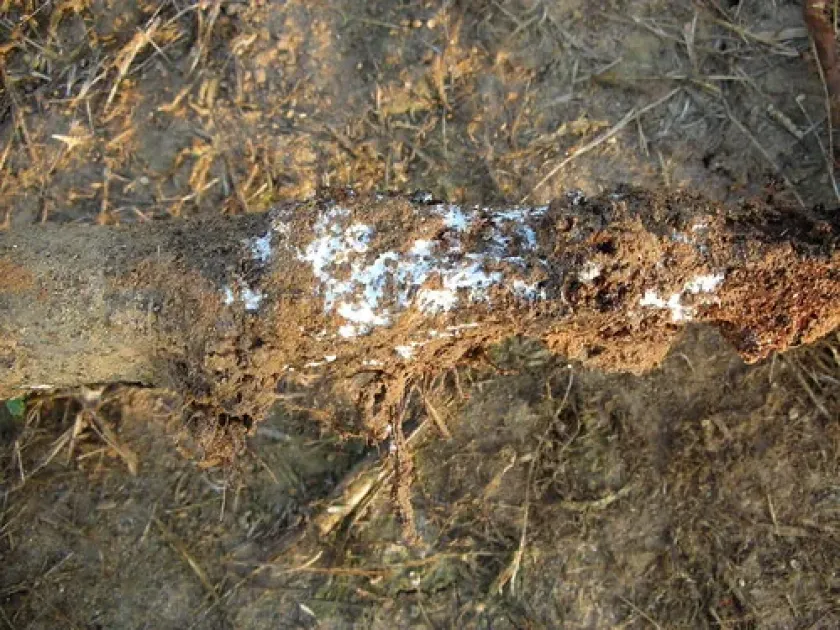
Upon examination of the root system, a distinct white, plaque-like mycelial layer is found covering the roots. The bark of the affected roots becomes fragile, peels away easily, and may emit a foul odor.
The tissues beneath the bark show signs of advanced decay, often turning into a soft, mushy, or stringy mass. The structural roots may lose their rigidity, leading to potential instability of the entire plant.
Hosts such as apple, raspberry, citrus, and cacao exhibit varying symptoms, ranging from localized root rot to systemic decline. The infection often progresses slowly, making it hard to notice in early stages.
In the final stages of the disease, the root system is unable to sustain the plant’s hydration and nutritional requirements, resulting in wilting and eventual death of the affected specimen.
Pathogen
The causative agent of this disease is the basidiomycete fungus Scytinostroma galactinum. This pathogen is known as a wood-decay fungus that primarily targets the root systems and root crowns of various perennial plants.
The fungus exists primarily as a soil-borne organism, thriving in organic matter and decaying debris. It utilizes its mycelium to spread through the soil, eventually reaching the roots of living susceptible plants.
Scytinostroma galactinum produces white, felt-like mycelial mats that adhere tightly to the roots of the host. These mats are critical for the fungus to establish infection and draw nutrients from the host tissues.
As a pathogen, it secretes potent enzymes that degrade lignin and cellulose, effectively softening the root cortex and causing a significant loss of structural integrity in the plant's foundation.
The biological life cycle of this fungus is highly adapted to persistent soil moisture, allowing it to survive through unfavorable conditions until it finds a suitable host to colonize.
Conditions for development
White root rot development is heavily influenced by soil moisture levels. Waterlogged or poorly drained soils create the perfect environment for the growth and spread of Scytinostroma galactinum.
Temperatures between 15°C and 25°C are highly conducive to the proliferation of the fungal mycelium. Within this range, the pathogen exhibits its highest activity and colonizing capacity.
Improper cultural practices, such as excessive mechanical cultivation around the base of trees, damage the roots and create entry points for the fungus to invade the plant tissues.
High levels of undecomposed organic matter in the soil serve as a reservoir for the pathogen, sustaining its population and facilitating the infection of new, susceptible crops.
Poor soil aeration and lack of regular maintenance further exacerbate the situation, preventing the roots from recovering and allowing the fungus to dominate the rhizosphere.
Why it matters
This disease poses a severe threat to long-term fruit production. The primary danger lies in its ability to destroy the root system completely, leading to the irreversible death of mature productive trees.
Reduced yield is a common consequence of white root rot, as the damaged roots fail to absorb essential water and nutrients required for fruit development and vegetative health.
The presence of Scytinostroma galactinum can lead to significant economic losses for growers, necessitating the removal of entire blocks of orchards or plantations to halt the spread of infection.
For crops like cacao and citrus, where long-term plantation health is essential, this disease can destabilize the agricultural ecosystem and lead to massive declines in profitability.
Managing the harm caused by this pathogen requires proactive monitoring and long-term investment in soil health and disease prevention strategies.
Protection
Effective control starts with soil management. Ensuring adequate drainage and improving soil structure are the most critical steps to prevent the pathogen from flourishing.
Avoid mechanical damage to roots during agricultural operations. Implementing careful weeding and cultivation techniques minimizes the risk of creating entry points for fungal infection.
Promptly identify and remove infected plants, including all major roots, from the field. Dispose of these materials away from the cultivation area to prevent further spread of the inoculum.
Maintaining high soil fertility and pH balance through regular testing and fertilization helps plants strengthen their natural defenses against common root diseases.
- Utilize certified, disease-free planting material.
- Implement proper spacing to encourage better aeration.
- Apply specialized fungicides only when recommended by a professional.
- Monitor plantations regularly for early signs of canopy yellowing.
In brief
4
Affects crops
Biology
Pathogens and affected parts
Pathogens
Affected plant parts
root
Content graph
Affects crops · 4
Content graph
Connections · White root rot
Most often together:
Marketplace
Products · 70









Community
Discussion
No discussions yet — be the first.