
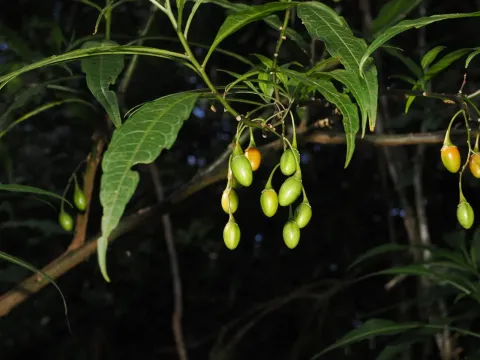
Kangaroo apple
Solanum aviculare G. Forst.
Kangaroo apple (Solanum aviculare) is a member of the Solanaceae family, originating from Australia and New Zealand. While perennial in its native habitat, it is typically managed as an annual crop in colder agricultural zones.
What the section contains
Kangaroo apple
The sowing process begins in late winter, utilizing greenhouse or indoor nursery conditions. Seeds require consistent warmth, typically between 20°C and 25°C, to achieve high germination rates.
Transplanting seedlings to the field occurs only when all risks of frost have passed. The plants are sensitive to soil temperature, requiring the ground to be well-warmed before planting to ensure rapid root establishment.
Proper spacing is crucial for canopy development and disease prevention. A planting density that allows for adequate airflow between individual bushes is highly recommended for commercial production.
Direct seeding in the field is rarely practical in most regions, making the use of high-quality, pre-hardened transplants the industry standard for ensuring consistent field establishment.
This crop thrives in sunny, open locations with well-drained, fertile soil. It is highly sensitive to waterlogged conditions, which can lead to rapid root decay and plant failure.
Soil pH should be maintained in the slightly acidic to neutral range for optimal nutrient uptake. Regular monitoring of soil fertility is essential, as the plant is a heavy feeder during its rapid growth phase.
Adequate water supply is mandatory throughout the growing season. While the plant can tolerate short dry spells, drought significantly reduces biomass production and active compound levels.
Balanced fertilization programs, featuring nitrogen early in the season and phosphorus before flowering, support robust plant growth and high leaf yield.
Protection from strong winds is advisable for larger plantings, as the stems can be brittle. Strategic placement or windbreaks can enhance overall field productivity.
Pest management is focused on controlling typical Solanaceae-attacking insects such as aphids, spider mites, and the Colorado potato beetle. Integrated pest management strategies are most effective.
Fungal pathogens like late blight are major threats, particularly during periods of high humidity and rainfall. Preventative fungicide applications and proper spacing significantly reduce infection rates.
Viral infections, including tobacco mosaic virus, can cause stunted growth. Strict sanitation protocols, including the disinfection of tools and control of insect vectors, are necessary for prevention.
Root rots are frequently associated with poor soil structure or over-irrigation. Proper site selection and careful irrigation scheduling are the best defenses against these soil-borne threats.
Monitoring for foliage damage is essential throughout the season. Early detection of pests allows for targeted intervention, reducing the need for broad-spectrum chemical applications.
The primary harvest target for this crop is the leaves, which are rich in steroid alkaloids. Harvesting should be carefully timed to occur during the peak flowering stage to ensure maximum chemical content.
Commercial harvest involves multiple cuttings throughout the growing season. Managed pruning encourages the development of new, high-quality foliage, maximizing the total seasonal yield.
Post-harvest handling requires immediate processing to prevent spoilage. Leaves must be dried in controlled environments with adequate airflow to preserve the integrity of the active compounds.
Drying temperatures should be kept below 50°C to avoid thermal degradation of the plant material. Proper ventilation is key to removing moisture efficiently and maintaining quality.
Final storage involves placing the dried product in airtight containers, kept in cool, dark, and dry conditions to ensure long-term stability and market value of the raw material.