
Silverleaf nightshade
Solanum elaeagnifolium Cav.
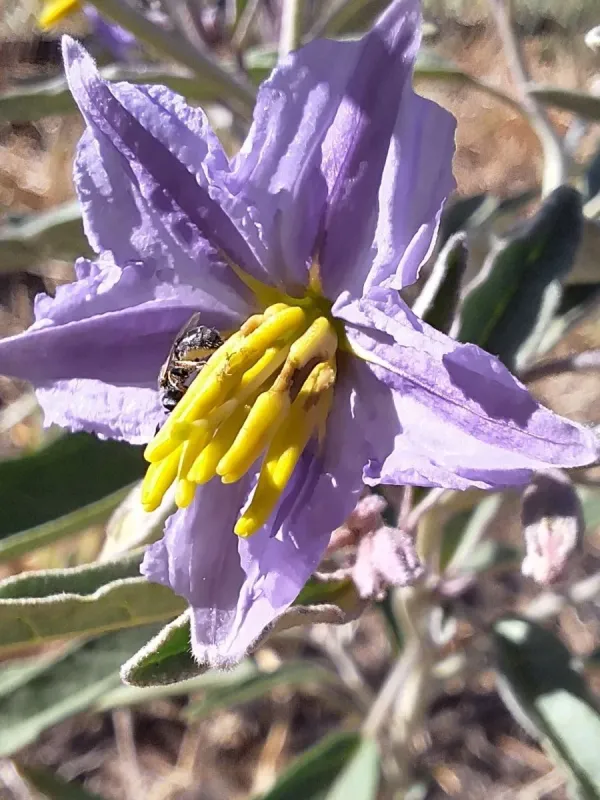
Description
Growing requirements
Silverleaf nightshade (Solanum elaeagnifolium) is a persistent perennial herb within the Solanaceae family. It is recognized as a significant agricultural weed globally, characterized by its deep root system and silver-colored leaves covered in fine hairs.
Native to the Americas, this species has invaded various agricultural regions across the world. It is highly adaptable and thrives in environments where other crops struggle, often dominating pastures and cultivated fields.
The plant demonstrates extreme drought tolerance, largely due to a massive root network that can extend several meters deep. It prefers sunny, open areas with well-drained soils but can survive in poor, alkaline, or compacted soil conditions.
Management remains a major challenge for agronomists. Standard control practices involve a combination of deep tillage to disrupt root growth and the application of systemic herbicides to exhaust the plant's food reserves stored in the roots.
Economically, silverleaf nightshade is detrimental because it competes with crops for water and nutrients. Furthermore, its berries contain toxic alkaloids, making the plant poisonous to livestock and reducing the overall productivity of grazing land.
Main diseases and pests
While remarkably robust, silverleaf nightshade can be affected by powdery mildew and various leaf spot fungi, especially in humid regions, though these rarely cause the plant's total demise.
Several insect species, including certain leaf beetles and aphids, may feed on the foliage, providing limited natural control that fails to keep the plant's rapid spread in check.
Research into biological control agents, such as specific gall-forming insects from its native range, continues, but they are not yet widely available or effective enough for standard field application.
A critical threat posed by this weed is its role as a reservoir for plant viruses, including those affecting tomatoes and peppers, making it a liability in areas with intensive vegetable production.
Strategic monitoring is crucial, as the weed can propagate both via seeds and broken root segments, meaning that mechanical disturbance without follow-up chemical control often exacerbates the infestation.