
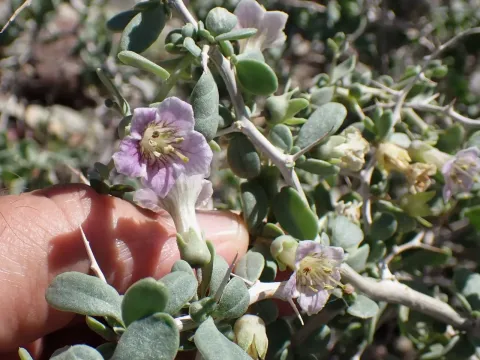
Pale wolfberry
Lycium pallidum
Pale wolfberry (Lycium pallidum) is a deciduous shrub belonging to the Solanaceae family. As a hardy member of the wolfberry genus, it is remarkably adapted to survive in some of the most challenging environments in the southwestern United States and Northern Mexico.
What the section contains
Pale wolfberry
The native habitat of this plant consists of arid desert plains, rocky slopes, and alkaline washes. Its evolutionary history has provided it with unique traits, such as deep rooting systems and water-storing tissues, which allow it to thrive where other standard agricultural crops would wither.
Optimal growth requires well-drained, sandy or gravelly soils. While the plant can tolerate poor fertility, it is highly sensitive to waterlogged conditions, which can lead to rapid root rot. Therefore, site selection should prioritize slopes or soil with excellent aeration properties.
Climate requirements for this culture involve high heat and full sunlight. Shade will severely reduce the plant's vegetative vigor and fruit production. Being a desert-adapted species, it demonstrates high resilience to extreme temperature fluctuations and high UV exposure throughout the growing season.
Botanically, Lycium pallidum is characterized by stiff, thorny branches that serve as a deterrent to browsers. Its foliage is distinctively pale or grayish-green, providing an aesthetic value alongside its functional role as a hardy desert shrub in semi-arid landscape management.
The primary agricultural interest in pale wolfberry lies in its fruit production. The berries are typically reddish to orange when ripe and contain various phytochemicals that have been historically utilized by indigenous populations for both food and medicinal applications.
Yield capacity is significantly improved by providing supplemental irrigation during the critical flowering and fruit set phases. Although the shrub is naturally productive in arid environments, controlled cultivation can transform it into a reliable source of nutraceutical berries for dryland farming.
Beyond fruit production, the species is highly valued for erosion control and windbreak utility. Its dense, thorny thickets are excellent for stabilizing soil in areas prone to desertification, providing a biological barrier that protects soil layers from harsh winds.
Harvesting remains a challenging task due to the presence of sharp spines along the woody stems. Modern agricultural efforts are focusing on the development of thornless varieties to facilitate easier manual and mechanical harvesting, which is a vital step toward commercial viability.
Future prospects for this crop involve its integration into agroforestry systems. By acting as a hardy understory or hedge component, pale wolfberry contributes to the biodiversity of reclaimed arid lands, improving soil moisture retention and overall ecosystem stability in neglected regions.
Disease pressure on pale wolfberry is generally low, provided that the growing environment mimics its natural dry habitat. However, in cases of poor site drainage, fungal pathogens can infect the root system, causing significant decline in plant health and overall vigor.
Powdery mildew is a potential threat when humidity levels rise unexpectedly, especially in areas with poor airflow. Providing adequate spacing between plants is the most effective cultural practice to mitigate the spread of fungal spores and ensure the leaves stay healthy.
Spider mites are common pests in hot, dry conditions and can cause significant damage to the foliage if left unchecked. These pests thrive on heat-stressed plants, so maintaining a balanced hydration level can help the shrub resist infestation and maintain its photosynthetic capacity.
Aphids can occasionally colonize young growth during the spring, causing leaf deformation and potential stress to the plant. Regular monitoring during the active growth period allows for early detection, making it easy to manage using simple biological control methods or pruning.
The overall resilience of Lycium pallidum makes it an excellent candidate for low-input agriculture. By practicing routine sanitation, such as the removal of dead or crossing branches in late winter, growers can minimize the habitat for pests and keep the plants healthy year-round.