
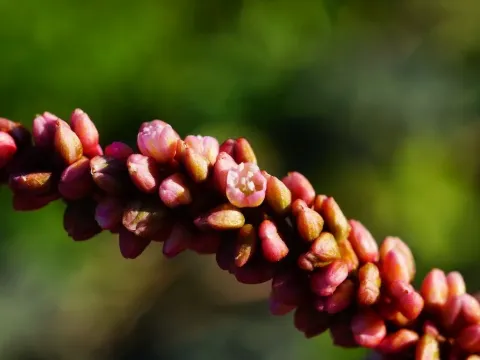
Smooth knotweed
Polygonum glabrum
Smooth knotweed (Polygonum glabrum) is a perennial herbaceous plant belonging to the Polygonaceae family. As a typical hygrophyte, it naturally thrives in wetland habitats, marshes, and riverbanks where moisture is continuously available to the root system.
What the section contains
Smooth knotweed
Originating from tropical and subtropical regions, the plant requires a warm climate with stable temperatures throughout the growing season. It is highly susceptible to frost, which makes it unsuitable for cultivation in temperate zones without strict greenhouse control.
For optimal growth, the species demands fertile soils rich in organic matter. A neutral or slightly acidic pH is preferred, as it ensures the efficient uptake of micronutrients essential for the rapid development of its succulent stems and leaves.
Agricultural practices for this crop focus on irrigation management. In commercial farming, methods such as furrow irrigation or controlled flooding are employed to mimic the natural aquatic environment, ensuring the soil remains waterlogged but not stagnant.
Exposure to full sunlight is critical for the plant to achieve its maximum biomass potential and to synthesize the secondary metabolites required for its pharmacological properties. In areas with high light intensity, the plant exhibits accelerated growth rates.
The primary economic use of smooth knotweed is in the pharmaceutical industry. The plant is harvested for its aerial parts, which are rich in flavonoids, tannins, and other bioactive compounds used in traditional and modern medicinal formulations.
The harvest timing is strictly regulated by the plant's phenological stage. The highest concentration of medicinal components is found during the peak flowering period, which marks the ideal time for harvesting the foliage for further processing.
Harvesting is labor-intensive and is typically performed manually to ensure the integrity of the plant tissue. Once collected, the biomass undergoes a drying process under controlled temperatures to prevent degradation of the active chemical constituents.
Productivity is highly dependent on nitrogen availability and moisture levels. With appropriate fertilization and intensive irrigation, the plant can produce multiple cuttings per season, making it a viable crop for specialized herbal production facilities.
Beyond pharmaceuticals, there is ongoing research into the use of smooth knotweed biomass for industrial applications, including the potential extraction of natural dyes and bio-active additives for environmental remediation projects.
Fungal pathogens represent the most significant threat to smooth knotweed cultivation, particularly when air circulation is poor. Conditions of high humidity often lead to outbreaks of leaf spot diseases that can quickly diminish crop quality.
Pests, including aphids and various leaf-feeding insects, can cause severe damage if left unmanaged. Integrated pest management strategies are essential to protect the crop while maintaining the chemical purity required for medicinal use.
Weed management is vital during the early vegetative stages, as the plant grows relatively slowly at the start. Regular weeding is necessary to prevent competition for light and nutrients, which could otherwise weaken the development of the crop.
Soil-borne pathogens can flourish in permanently wet environments. Proper site selection and water management are critical to ensure that water remains fresh and aerated, preventing the colonization of anaerobic bacteria that lead to root decay.
Crop rotation and the use of disease-free propagation material are the cornerstones of successful cultivation. These practices help minimize the build-up of soil pests and pathogens, ensuring consistent yields over consecutive planting cycles.