
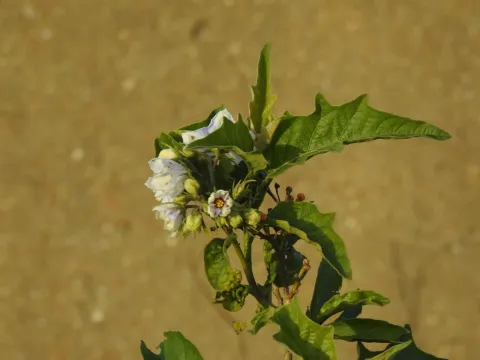
Solanum fastigiatum
Solanum fastigiatum
Solanum fastigiatum is a member of the Solanaceae family, known for its adaptability to specific subtropical environments. Originating from South America, particularly regions in Brazil and Argentina, this plant typically thrives in areas with consistent moisture and moderate temperatures.
What the section contains
Solanum fastigiatum
To ensure healthy growth, the plant requires well-drained soil with a high organic matter content. It is sensitive to soil compaction and waterlogging, so choosing a site with an appropriate slope or sandy-loam texture is essential for optimal development of the root system.
The climate requirements for Solanum fastigiatum involve long, sunny growing seasons without extreme temperature fluctuations. The plant responds well to stable thermal conditions that promote vegetative growth and flower initiation, which are critical for its lifecycle.
Botanically, it is identified by its sturdy, fastigiate branches and lanceolate to ovate leaves. The flowers are generally actinomorphic, typical of the nightshade family, and are often arranged in clusters that appear periodically during the growing phase.
General management includes soil aeration through regular hoeing and careful water scheduling. Nitrogen-based fertilization should be applied with caution to avoid excessive vegetative growth at the expense of general plant vigor and fruit set.
The plant faces significant pressure from typical Solanaceae pathogens, especially in high-humidity conditions. Fungal diseases such as late blight represent a persistent challenge that requires proactive management and resistant variety selection if available.
Pests, particularly beetles from the Chrysomelidae family, are known to target Solanum species. These insects can defoliate plants rapidly, necessitating monitoring programs during the early stages of the growing season to prevent economic loss.
In addition to beetles, sap-sucking insects like aphids and spider mites can cause severe stress to the plant. These pests often congregate on the undersides of leaves, making them difficult to detect until significant damage to the plant tissue has already occurred.
Integrated Pest Management (IPM) is the recommended approach for managing threats. This involves monitoring the population density of harmful insects and applying treatments only when necessary, which helps preserve beneficial predator populations in the field.
Crop rotation remains the most effective long-term strategy for minimizing soil-borne disease pressure. By alternating with non-solanaceous crops, farmers can disrupt the life cycles of pathogens and maintain higher soil health standards over multiple years.