
Night-flowering tobacco
Nicotiana noctiflora
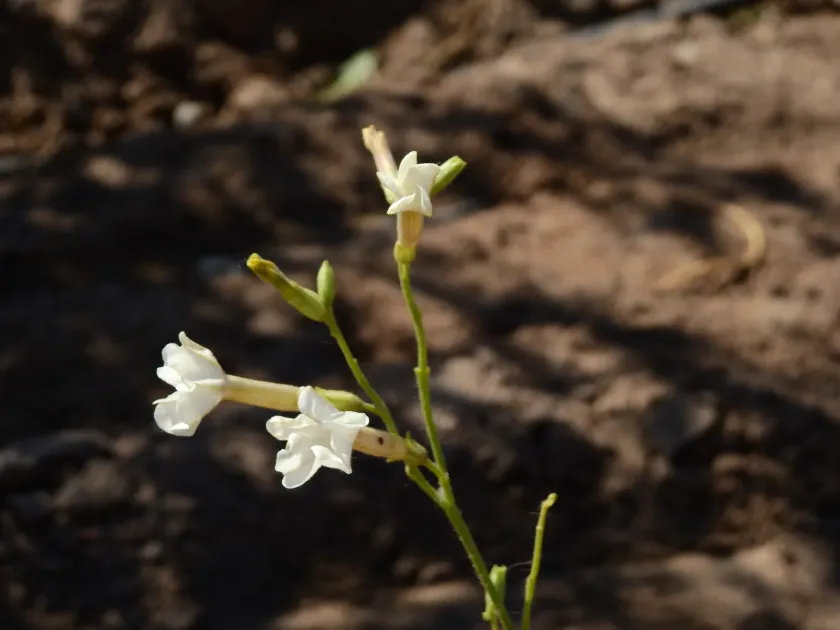
Description
Sowing dates
Sowing should take place in late winter or early spring using a sterile seed-starting mix. The tiny seeds are surface-sown and pressed gently into the medium, as they require light to germinate effectively.
Maintain an ambient temperature of 20 to 22 degrees Celsius to ensure uniform germination. High humidity can be maintained by covering the trays with a clear dome, though it must be removed once sprouts appear.
Seedlings need supplemental lighting if grown in low-light conditions to prevent etiolation. Once the plants reach the two-leaf stage, they should be carefully pricked out into individual small pots.
Hardening off the plants is a critical phase. Gradually acclimatizing them to outdoor temperatures over a period of ten days prevents transplant shock and ensures robust growth in the field.
Transplanting to the final site should occur only after all risks of frost have passed. Space plants roughly 30–40 cm apart to promote good air circulation and prevent overcrowding.
Growing requirements
Nicotiana noctiflora is a member of the Solanaceae family, native to the arid and temperate regions of South America. It is prized for its nocturnal flowering habit and intense, sweet evening fragrance.
The plant thrives in full sun but tolerates partial shade. In extremely hot climates, some protection during the peak afternoon heat helps maintain leaf turgor and flower quality.
Well-drained soil is essential for this species. It performs best in loam soils with a neutral pH, though it can adapt to various conditions provided there is no stagnant water near the roots.
Watering requirements are moderate; the soil should be allowed to dry slightly between waterings to prevent root stress. Overwatering is the most common cause of failure in container-grown specimens.
Fertilization with a balanced NPK ratio every two weeks supports sustained growth. High phosphorus fertilizers are recommended as the flowering phase begins to promote a larger display of blossoms.
Main diseases and pests
Aphids are the primary pest for this species, congregating on tender stems and undersides of leaves. Regular monitoring and physical removal or insecticidal soap are usually effective controls.
Powdery mildew is a fungal threat that appears during periods of high humidity and poor ventilation. Keeping leaves dry and spacing plants correctly helps mitigate this risk significantly.
Root rot is typically caused by poorly drained substrate. If plants show signs of yellowing or wilting despite adequate moisture, immediate inspection of the root system is required.
Spider mites can be problematic in warm, dry weather. Increasing local humidity or using horticultural oils can help manage populations before they cause significant aesthetic damage to the plant.
Tobacco mosaic virus is an incurable threat. Strict sanitation, including disinfecting pruning tools and controlling potential insect vectors, is the only way to safeguard the crop from viral infection.