
Naranjilla
Solanum quitoense Lam.
Description
Sowing dates
Naranjilla (Solanum quitoense Lam.) is a perennial shrub of the Solanaceae family that is frequently cultivated as an annual crop due to its sensitivity to cold weather. Seeds should be sown in trays in late winter or early spring to ensure the plant has enough time to establish itself during the growing season.
Optimal germination requires consistent temperatures between 22 and 25 degrees Celsius. It is essential to use a light, well-draining soil mix to prevent the damping-off disease, which is a major threat to young seedlings in their early stages of growth.
Pricking out the seedlings should be done carefully after the appearance of two or three true leaves. Naranjilla plants have sensitive roots and do not respond well to disturbance, so keeping the root ball intact during the transplanting process is crucial.
Seedlings must be hardened off for about two weeks before they are moved to their permanent outdoor or greenhouse location. This phase is vital to help them adapt to ambient sunlight and varying humidity levels.
Planting out should only occur once the soil is sufficiently warm and all risk of frost has passed. As a tropical plant, Naranjilla cannot tolerate even mild frost, which can cause severe damage or death to the plant.
Growing requirements
Naranjilla thrives in tropical climates and prefers temperature ranges between 18 and 25 degrees Celsius. High air humidity is necessary for optimal development, making misting or controlled irrigation systems essential in drier environments.
The soil should be nutrient-rich and slightly acidic with excellent drainage capabilities. Waterlogging is extremely detrimental to the root system and must be avoided at all costs to prevent the development of root rots.
Although the plant can tolerate partial shade, it requires adequate ambient light to maintain health. Direct, intense midday sun should be avoided as it can scorch the large, hairy leaves that are characteristic of the species.
Protection from wind is critical for this crop. Because of the large leaf surface area, mechanical damage from strong winds can easily occur, creating wounds that invite secondary fungal infections.
Regular irrigation is required to keep the soil consistently moist but never waterlogged. Applying organic mulch around the base of the plant helps to maintain soil moisture and regulates the temperature of the root zone.
Yield
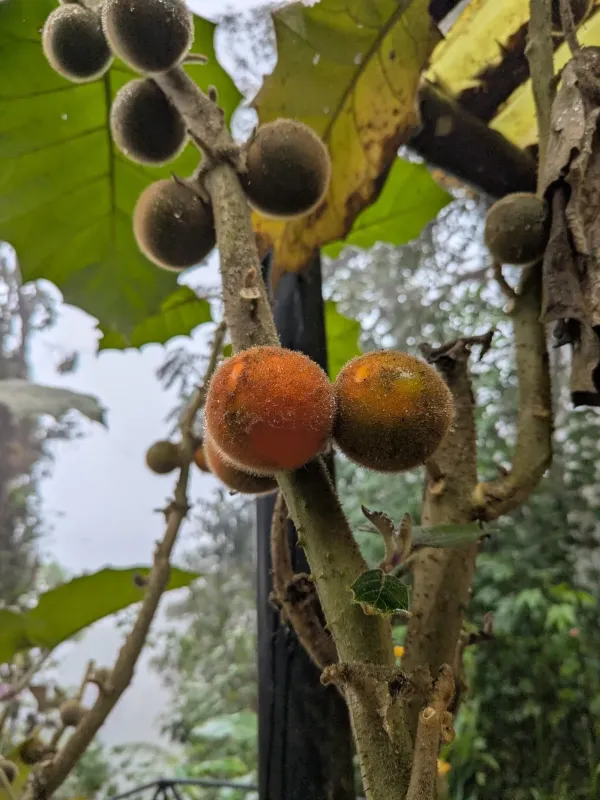
Under favorable conditions, the first harvest can be expected within 9 to 12 months from sowing. The fruit is a round, orange berry covered in fine hairs that are easily removed when the fruit reaches maturity.
Commercial yields can range from 15 to 30 tons per hectare depending on management practices. Harvesting is labor-intensive as the fruits ripen asynchronously, requiring multiple visits to the field to collect fully ripe berries.
The flavor profile of the fruit is highly prized, often described as a refreshing blend of pineapple, strawberry, and passion fruit. It is widely used in the production of juices, nectars, and various gourmet desserts.
Beyond its culinary utility, Naranjilla serves as an ornamental plant in tropical landscaping due to its striking, large leaves with purple-hued veins, which add texture and beauty to any garden.
Fresh fruit is notoriously difficult to transport due to the thin skin and soft flesh. Consequently, most of the harvest is processed into pulp or concentrate shortly after picking to preserve quality.
Main diseases and pests
Nematodes are among the most serious pests of Naranjilla, causing damage to the roots that stunts the plant's overall growth. Effective management involves soil solarization and the use of resistant rootstocks in grafted plants.
Aphids and spider mites frequently infest the underside of the leaves. Regular monitoring and the use of biological control agents are recommended to keep pest populations below economic damage thresholds.
Fungal pathogens such as anthracnose and various types of rots are common in humid conditions. These diseases affect both the foliage and the fruit, often resulting in significant post-harvest losses.
Viral infections transmitted by insect vectors can cause widespread damage to plantations. Strict hygiene measures and controlling the insect vector population are essential for long-term health of the crop.
Maintaining proper spacing between plants is one of the best ways to improve air circulation and reduce the incidence of disease. Avoiding overhead watering can also significantly decrease the risk of foliage-based infections.
Harvesting
Harvesting is performed by hand to ensure the delicate fruits are not bruised. Mature berries are typically identified by their vibrant orange color and the ease with which they detach from the stem.
Care must be taken during the harvest to minimize physical contact with the fruit skin, as any damage can lead to rapid deterioration. In professional settings, the fine hairs are cleaned off immediately after picking.
Post-harvest storage requires cool conditions to slow down respiration. However, even with refrigeration, the shelf life of fresh Naranjilla is limited, usually lasting no more than a week.
Fruits intended for industrial processing are often picked at a slightly firmer stage of ripeness to withstand transport to the processing facility without losing structural integrity.
After the peak production period, the shrubs are typically replaced, as productivity usually declines significantly in subsequent cycles, and the risk of pathogen buildup in the soil increases.